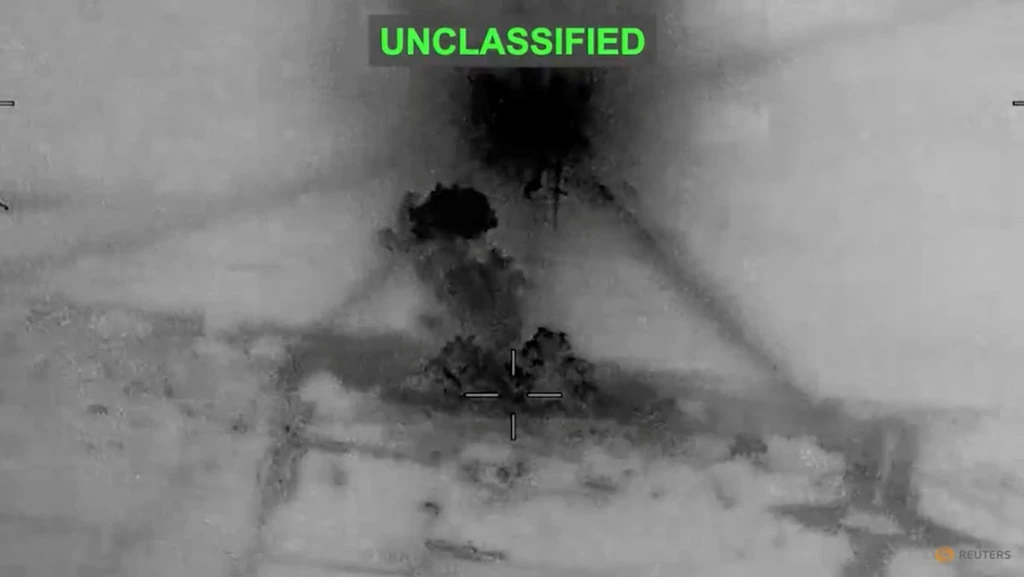
The United States military launched fresh strikes against Iran early Sunday, hours after a Panama-flagged tanker was attacked in the Strait of Hormuz. This marks the most severe escalation since a peace agreement was signed two weeks ago.
US Central Command stated the strikes were a "direct response to continued Iranian aggression against commercial shipping," targeting Iranian military facilities including surveillance, communications, and drone storage sites.
The attack on the tanker followed an earlier strike on a cargo ship, disrupting the vital energy shipping route that had just begun to reopen after months of blockade. The UK maritime security agency confirmed the tanker sustained damage, but the crew was safe.
Both sides have accused the other of violating the interim agreement. Iran claims the US did not uphold a promised ceasefire in Lebanon, while Washington says Iran has failed to honor the deal.
The conflict has broader regional implications. Iran has struck neighboring Gulf states hosting US military bases, including an attack on a communications tower in the port city of Sirik. Bahrain reported an Iranian drone attack on its territory.
US President Donald Trump warned on social media that Iran could cease to exist if forced to complete the military job. Vice President JD Vance stated the US has honored the ceasefire and blamed Iran for any return to conflict.
The fighting has kept hundreds of ships, including oil tankers, blockaded inside the Gulf. As they began leaving, oil prices tumbled. The US promotes a southern shipping lane along Oman's coast, while Iran seeks control and fees for a northern route through its waters.