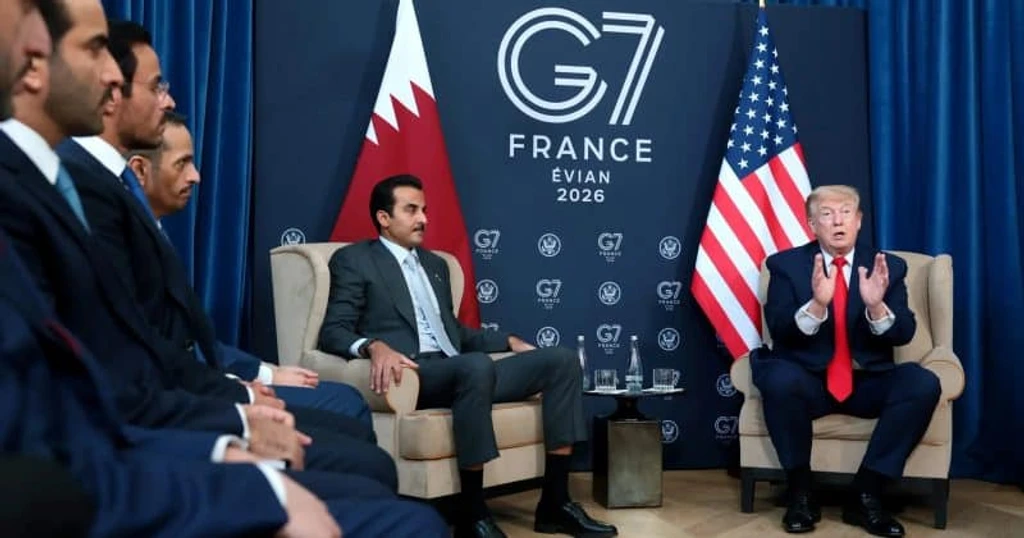
The United States and Iran have signed a historic peace deal at the G7 summit in France. The agreement ends the naval blockade choking global energy supplies and reopens the Strait of Hormuz to international traffic.
Finalized in mid-June 2026, this accord marks the most significant diplomatic breakthrough between Washington and Tehran in decades. President Trump announced the deal with cautious optimism, signaling an imminent restoration of maritime flow through the critical waterway.
The agreement rests on three pillars: restricting Iran’s nuclear program, ceasing military operations, and restoring trade routes. Roughly one-fifth of the world’s daily oil supply transits the Strait of Hormuz. The US blockade, initiated in April 2026, had severely disrupted this vital artery.
Diplomatic negotiations spanned over a year across Switzerland, Oman, and Geneva before culminating in France. Canadian Prime Minister Mark Carney joined other world leaders in underscoring the geopolitical significance of this resolution.
Energy markets now await tangible verification. The two-month blockade triggered severe supply shocks and spiked insurance costs. Because this deal is structured as a memorandum of understanding, sustained compliance remains essential to prevent market reversals.
Crypto investors should monitor physical ship traffic and verified nuclear compliance rather than headline sentiment. Bitcoin and digital assets experienced heightened volatility during the blockade. Concrete follow-through on reopening the strait will likely stabilize risk positioning across both commodity and digital asset markets.