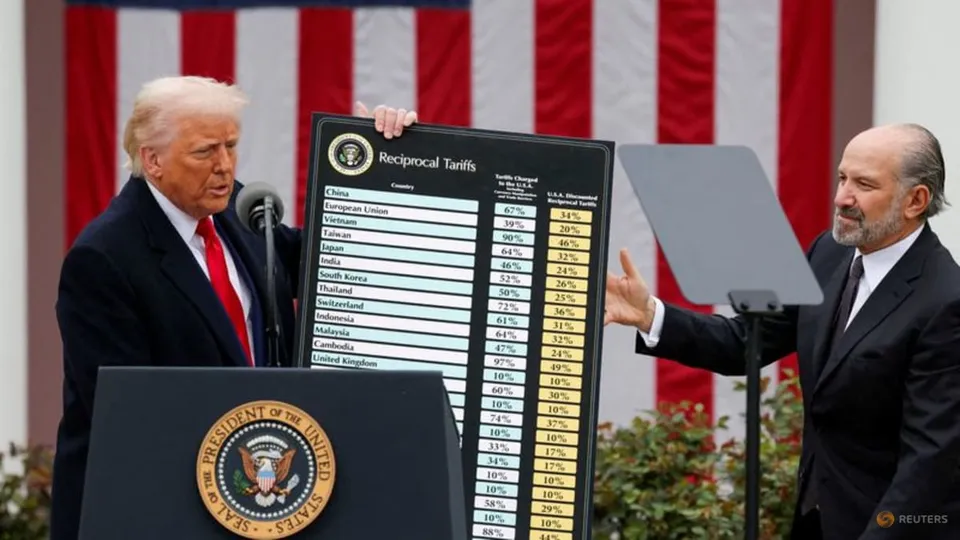
The US Supreme Court on Friday struck down President Donald Trump's sweeping tariffs, enacted under a law intended for national emergencies. The 6-3 ruling, authored by Chief Justice John Roberts, found that Trump's use of the International Emergency Economic Powers Act (IEEPA) exceeded his authority and infringed upon congressional powers, violating the "major questions" doctrine.
This doctrine requires executive actions of vast economic significance to have clear authorization from Congress. The court stated the president "must 'point to clear congressional authorisation' to justify his extraordinary assertion of the power to impose tariffs." Trump had utilized tariffs as a central economic and foreign policy tool, initiating a global trade war that alienated partners and created economic uncertainty.
The legal challenge was brought by affected businesses and 12 US states. The ruling could necessitate the refund of over $175 billion in collected tariffs. The Constitution grants Congress, not the president, the authority to levy taxes and tariffs, a power Trump bypassed by invoking IEEPA without congressional approval.
While Trump implemented additional tariffs under other laws, the IEEPA-based tariffs offered significant flexibility. Historically, IEEPA has been used for sanctions and asset freezes, not specifically for imposing tariffs, and the law does not mention tariffs. The Trump administration had argued that "regulate" imports under IEEPA implicitly included tariffs. The Supreme Court's decision potentially limits the executive branch's ability to unilaterally impose such broad economic measures.