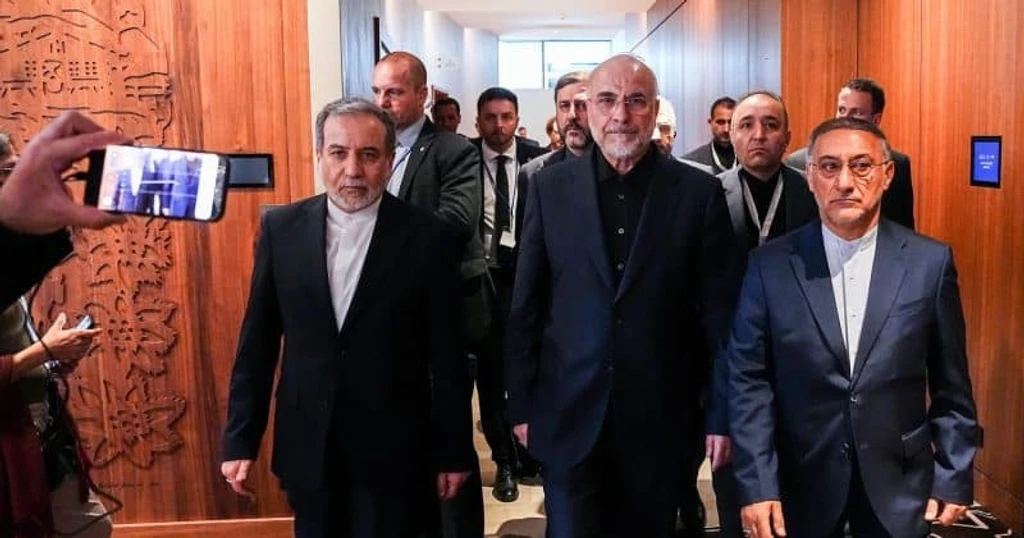
The US and Iran concluded two days of negotiations in Bürgenstock, Switzerland, on June 22. They established a High Level Committee to oversee nuclear protocols, sanctions relief, and maritime security in the Strait of Hormuz.
US Vice President JD Vance and Iranian Parliament Speaker Mohammad Bagher Ghalibaf led the discussions, mediated by Pakistan and Qatar. This builds on a Memorandum of Understanding signed on June 17, addressing the escalating tensions in the region since February 2026.
The High Level Committee aims for a comprehensive agreement within 60 days, targeting mid-August for resolution. Ghalibaf stressed the importance of negotiations over military actions.
Iran affirmed its commitment to international law while maintaining control over the Strait of Hormuz, a crucial oil transit corridor. This necessitates a new approach rather than reverting to previous management.
A de-confliction cell was also established to manage regional conflicts, indicating a holistic approach to security challenges.
The ambitious 60-day timeline contrasts with the protracted negotiations of the 2015 Iran nuclear deal (JCPOA), which collapsed after the US withdrawal in 2018. Shifting mediation to Pakistan and Qatar, combined with the inclusion of maritime security, reflects a broader framework for negotiations.