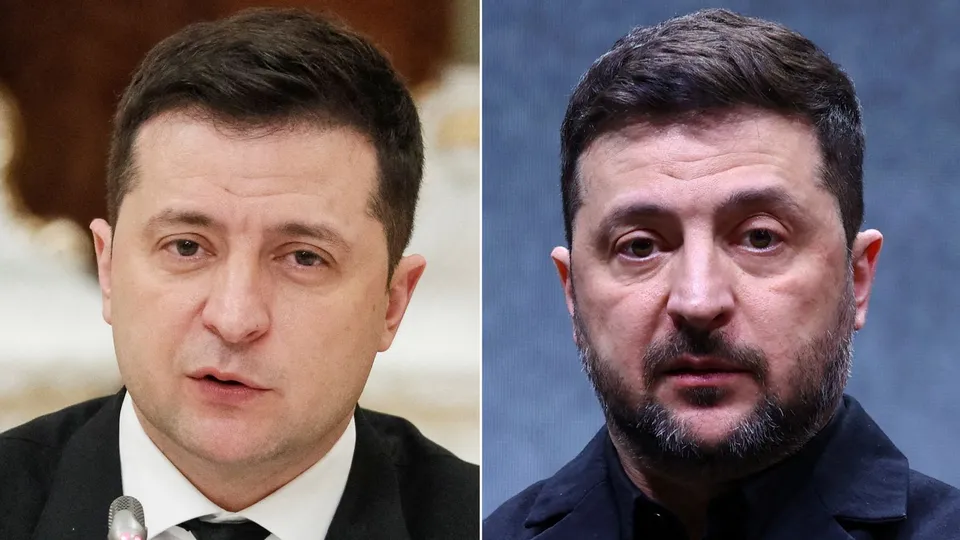
Four years into the Ukraine war, the decisions and leadership of Ukrainian President Volodymyr Zelenskyy and Russian President Vladimir Putin have profoundly shaped the conflict. Both leaders have undergone significant personal and public evolutions.
Volodymyr Zelenskyy
Once an actor with an unlikely path to the presidency, Zelenskyy has transformed from a less experienced leader into a global symbol of resistance. His early years often saw him in suits, appearing youthful. Today, he is invariably seen in military fatigues, a stark contrast that reportedly even ruffled Donald Trump during a White House meeting.
Domestically, the 2022 invasion saw an initial surge in Zelenskyy's approval as he chose to remain in Kyiv, embodying Ukrainian defiance. His nightly video addresses and visits to the front lines have unified the nation. While economic pressures and political controversies have caused a slight dip in approval, he retains broad support. Internationally, Zelenskyy's standing has soared. He has become the face of Ukraine's diplomatic efforts, framing the war as a fight for democracy and securing vital foreign support. Concerns about domestic corruption persist, but his global image remains largely positive.
Personally, the war has taken a toll. Separated from his family in the early months, he now reportedly cherishes communication with them more deeply.
Vladimir Putin
Despite anticipating a swift victory, Putin's invasion of Ukraine has now entered its fifth year, largely marginalizing him globally. Domestically, state narratives portray him as the wartime leader Russia requires, while internationally, he is seen as a more isolated, conflict-driven figure. He himself has stated he "jokes less" since the war began.
Within Russia, Putin's popularity has been bolstered by state media, repression, and patriotic mobilization. Initial approval ratings surged after the invasion. Despite economic strains and military setbacks, he maintains significant backing, though gauging true public opinion is difficult due to strict censorship. The Kremlin has demanded active support for the war, outlawing dissent and independent media. The rising cost of living has also impacted his standing.
Abroad, Putin's reputation has deteriorated significantly, leading to broad diplomatic isolation. He has narrowed his diplomatic circle, strengthening ties with allies like North Korea and China. Under Donald Trump's return to the US presidency, there have been signs of a potential shift in relations, including phone calls and a meeting.
Personally, the war has also affected Putin, who has become more physically and socially isolated, with fewer public interactions and reduced international travel.