
World Liberty Financial's native token WLFI lost roughly 17% of its value Wednesday as a governance proposal affecting more than 62 billion WLFI tokens opened for community voting - and the backlash was immediate.
WLFI was trading at around $0.06 at the time of writing, according to CoinGecko. That marks a 70% drop since the token first reached open markets, making Wednesday’s selloff the latest in a long string of losses for holders of the Trump-family-linked DeFi project.
The proposal behind the price drop would impose strict vesting schedules on tokens currently held by early investors and insiders. Under the plan, early investors face a two-year lockup cliff, followed by two more years of gradual release. Founders, team members, and advisers get the same two-year cliff but with a three-year linear vest after that. Voting runs through May 7.
World Liberty Financial framed the move as a show of long-term commitment. “62,282,252,205 locked WLFI tokens are subject to this proposal,” the project said in a post on X. “None of it touches the market for a minimum of two years if passed.”
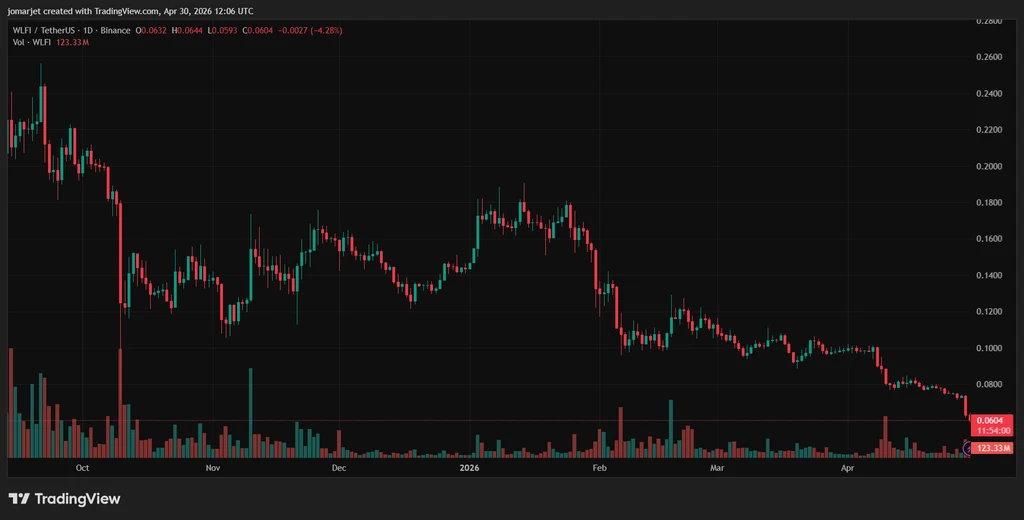
On paper, the vote is going well. As of Wednesday, 99.95% of cast votes supported the proposal, and the required quorum of 1 billion WLFI tokens had already been cleared. But those numbers don’t capture the full picture. Criticism has been loud on X, where replies to World Liberty’s announcement were largely negative. The voting structure itself drew sharp criticism - anyone who does not cast a vote risks having their tokens locked up with no end date. That mechanic has been widely called coercive.
Moonrock Capital founder Simon Dedic was among the most pointed critics, comparing the proposal to a rug pull and raising questions about the timing - the two-year unlock period lines up with the remainder of US President Donald Trump’s time in office. Tron founder Justin Sun, who holds a significant amount of WLFI, called it one of the “most absurd” proposals he had ever come across.
The team behind World Liberty Financial said the vesting design was built to create what they described as a “more clear, bounded picture of governance preferences.” The goal, they said, was to keep tokens in the hands of people who are genuinely committed to the project’s future.