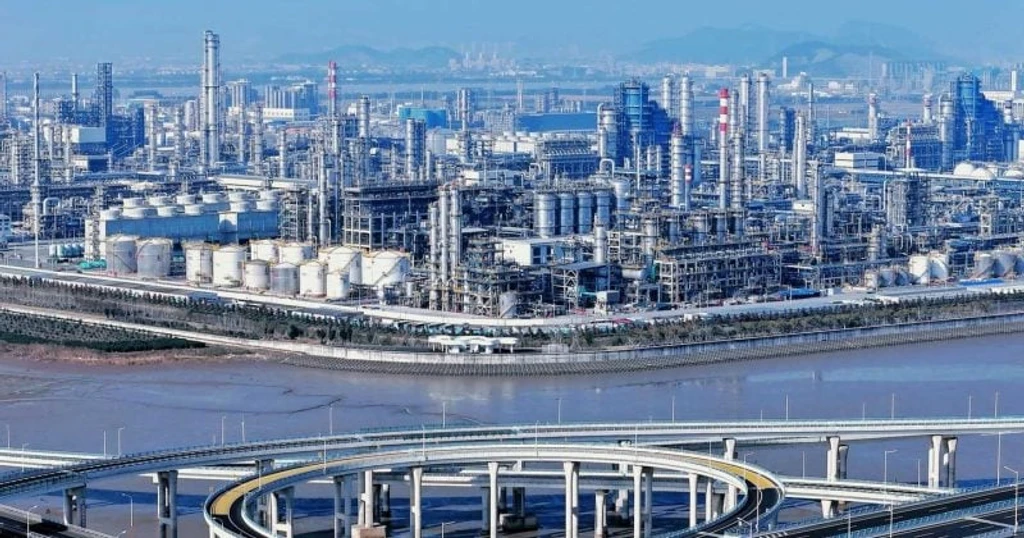
China's top economic planner has ordered Sinopec, the world's largest refiner, to maintain gasoline and diesel production at last year's levels despite tightening global oil supplies.
The National Development and Reform Commission issued the directive in March 2026, warning that refiners failing to meet output targets could face cuts to their crude import quotas. The move comes as fighting around the Strait of Hormuz disrupts oil flows.
Sinopec has already reduced processing rates by about 5% due to constrained crude availability. The company has also stopped purchasing Iranian oil, historically a cheap source for Chinese refiners.
By May 2026, China's crude imports fell to 7.8 million barrels per day, an eight-year low. The NDRC's order effectively asks refiners to maintain domestic fuel supply while accepting lower margins.
The situation highlights Beijing's long-standing effort to reduce dependence on Middle Eastern crude, which has historically supplied over 40% of China's oil imports.
Reports indicate that Iranian oil trade increasingly uses stablecoins like Tether's USDT to circumvent traditional banking channels, adding an unconventional digital finance dimension to the energy crisis.
For investors, the Sinopec situation underscores how state-directed enterprises operate under different risk calculus than Western majors, absorbing margin losses to meet government mandates.