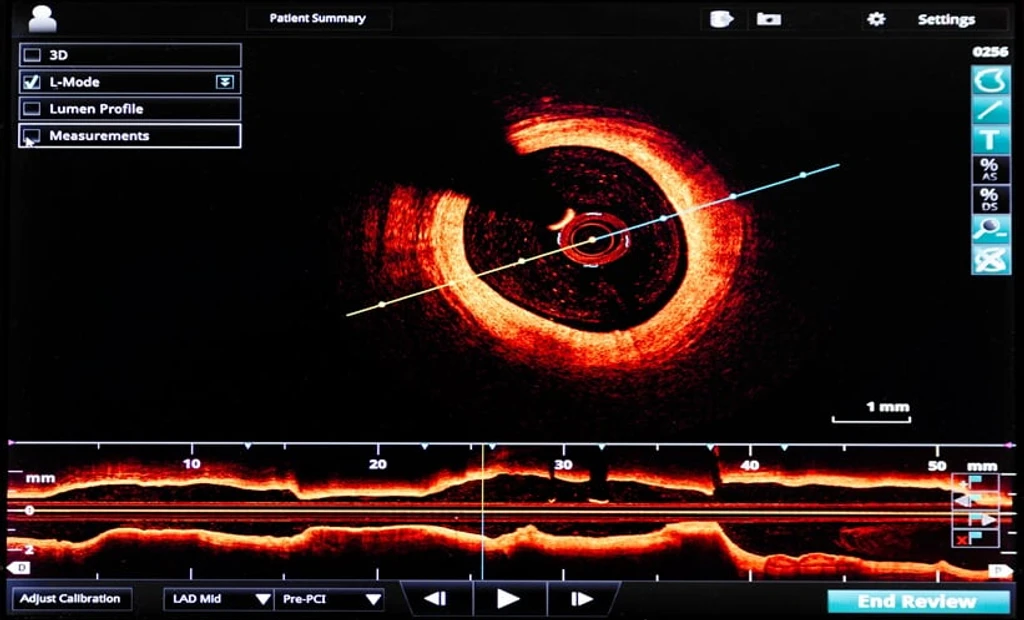
A new study presented at EuroPCR 2026 reveals that artificial intelligence can significantly boost clinician confidence in using optical coherence tomography during angioplasty and stent placement.
The research focused on a common challenge: interpreting OCT images requires experience, which can limit its use. The study surveyed 43 cardiologists and found that baseline confidence was much lower among less experienced users, especially for assessing high-risk plaque or identifying stent failure.
When doctors were shown AI-assisted visual support, confidence scores rose across nearly all clinical scenarios. For experienced clinicians, the biggest gains were in identifying stent failure, culprit lesions, and high-risk plaques. For less experienced users, confidence improved across every measure-and after AI support, the confidence gap between the two groups essentially disappeared.
The investigators say this suggests AI could democratize OCT interpretation, helping less experienced clinicians feel more confident making complex decisions during PCI. This could lead to wider adoption of OCT in routine practice.
While the study was based on hypothetical AI visualizations and survey responses, the authors note that clinician trust and perceived usefulness will be key to broader adoption. Further studies are needed to see if increased confidence translates into better procedural accuracy and patient outcomes.