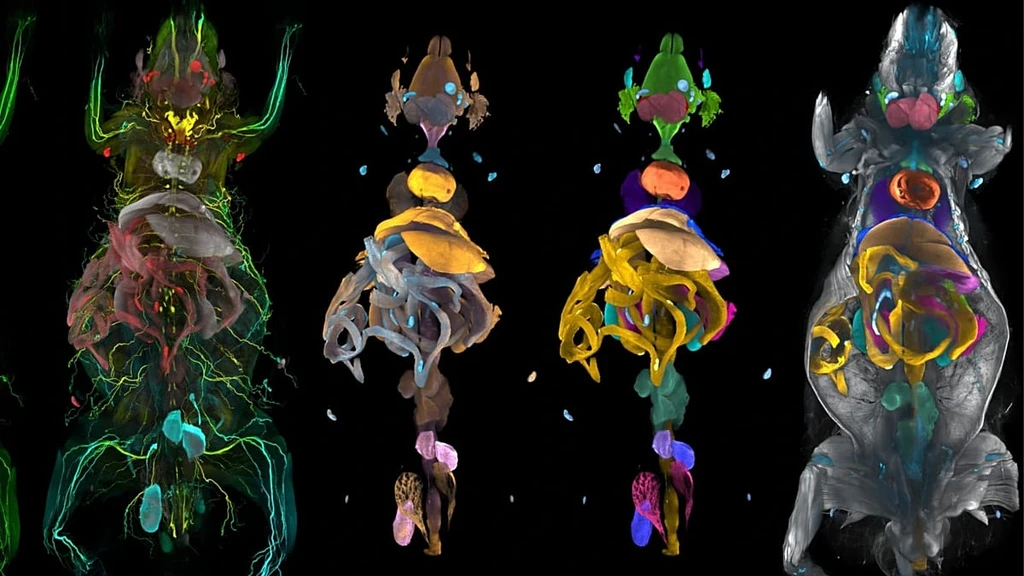
A groundbreaking new AI tool is providing the first-ever comprehensive view of how obesity ravages the entire body at the cellular level. Developed by researchers at Helmholtz Munich and Ludwig Maximilian University, the AI framework, dubbed 'MouseMapper,' creates a detailed 3D atlas of the whole body, mapping tens of millions of structures simultaneously.

For the first time, scientists can see beyond isolated organs. By using fluorescent markers and tissue-clearing techniques, the team rendered mouse bodies optically transparent. Light-sheet microscopy then captured high-resolution 3D scans, which the AI analyzed to map 31 distinct organs and tissue types.
When tested on mice fed a high-fat diet, the atlas revealed widespread inflammation in fat, liver, and muscle. But the most surprising findings were in the nervous system. The trigeminal nerve, responsible for facial sensation, showed significant structural damage with fewer branches and endings. Behavioral tests confirmed these mice had a reduced response to touch.
Crucially, the scientists found similar molecular changes in human tissue samples from individuals with obesity, suggesting the nerve damage observed in mice may translate directly to humans.
The researchers believe this platform is a major step toward creating 'digital twins' of organisms-virtual models that could simulate disease progression and test treatments, potentially accelerating drug discovery and reducing animal experiments.