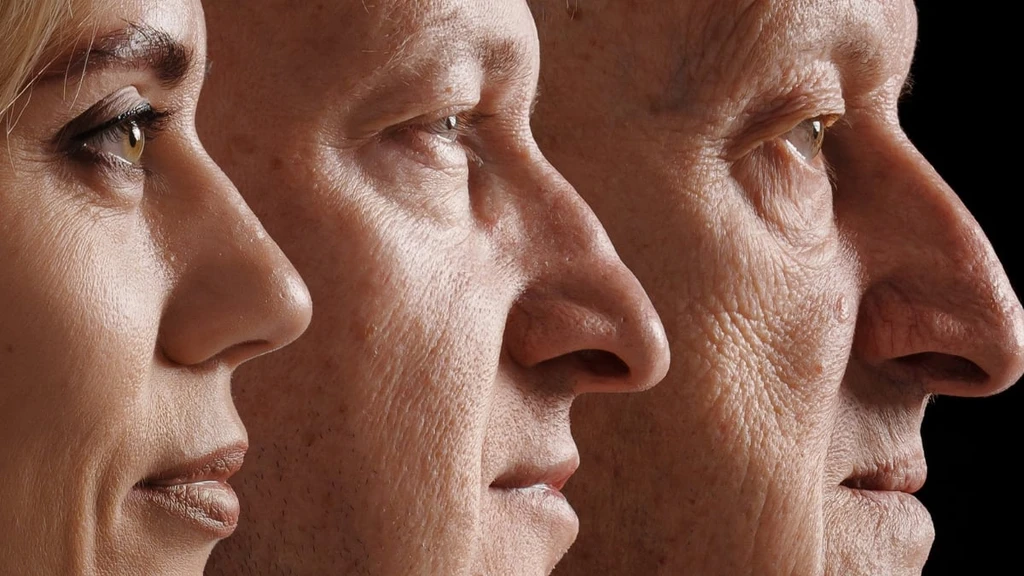
New research suggests that today's young adults are biologically older than previous generations were at the same age.

A study published in Nature Medicine examined blood markers from more than 164,000 participants in the UK and US, revealing a significant trend: Millennials and Gen Z are showing signs of accelerated aging compared to people born mid-20th century.
Using a measure called PhenoAge-a composite of nine blood biomarkers including inflammation and glucose-researchers calculated an 'age gap' to see whether individuals were biologically younger or older than their chronological years.

The gap was stark. UK adults born between 1965 and 1974 had a 23 percent higher biological age gap than those born in the early 1950s. In the US, the 1990-1999 cohort had a 92 percent higher gap compared to the 1965-1969 group.
This accelerated aging was strongly associated with early-onset cancers. For every standard-deviation increase in the age gap, the risk of developing solid tumors before age 55 rose by 8 percent, and lung cancer risk jumped 57 percent. The link held even after adjusting for smoking, obesity, and genetic predisposition.

'Our ultimate goal is to decode how modern environments become biologically embedded to drive cancer risk,' said molecular epidemiologist Yin Cao of Washington University School of Medicine in St. Louis, who led the study. 'This brings us closer to identifying risk earlier and developing prevention strategies tailored to an individual's biology.'
The findings, published in Nature Medicine, add to a growing body of evidence that early-life exposures are reshaping disease risks in younger generations.