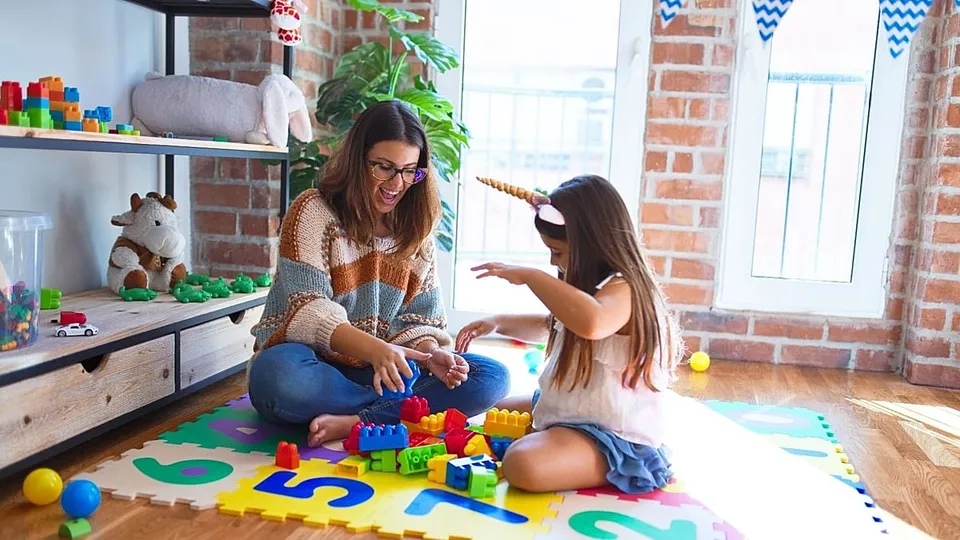
A new study indicates that bilingual mothers and their children maintain strong neural synchrony, a key indicator of healthy bonding, regardless of the language used during interaction. Researchers found that brain activity remains synchronized whether conversations occur in the mother's native tongue or in a second language.
Neural synchrony, characterized by simultaneous activity across neural networks, is crucial for parent-child connection. The study analyzed fifteen mother-child pairs where mothers were proficient English speakers as a second language and children were bilingual. During a 45-minute play session, mothers and children wore caps to measure brain oxygen concentration changes.
The findings showed that neural synchrony was more robust during interactive play than during independent periods. This synchronization was particularly pronounced in the frontal cortex, the area responsible for decision-making and emotional processing. The research concludes that the ability to switch languages does not impede a mother's capacity to synchronize with her child during playtime.
While this specific study focused on neural synchrony, broader research suggests that language use can shape communication. In Europe, a significant portion of the population is conversational in more than one language. However, for adults who learn a second language later in life, interactions might differ from their native tongue, especially in emotionally charged situations. Future research aims to explore families with varying language proficiencies and different types of social interactions.