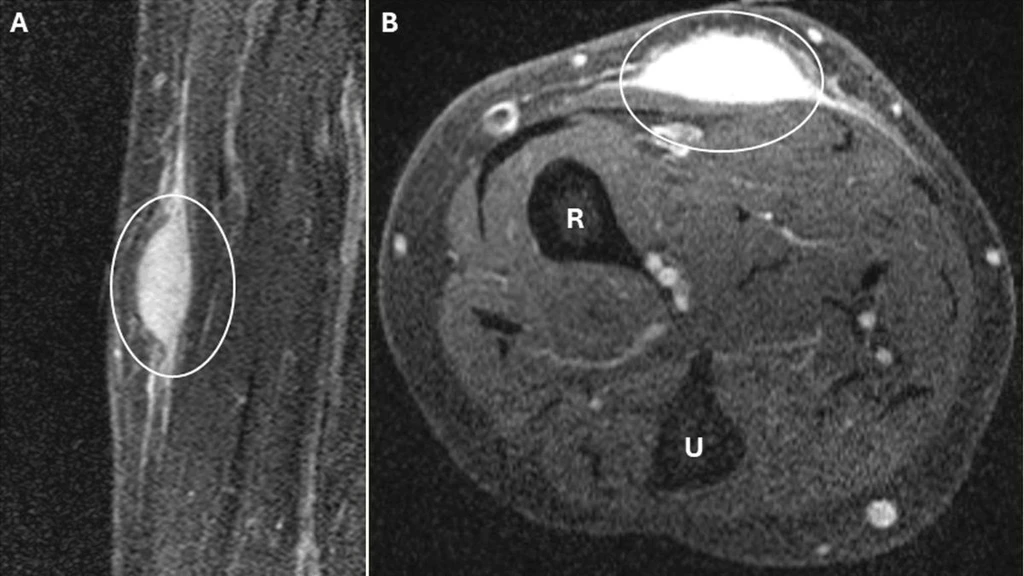
A 59-year-old woman in Wisconsin sought medical care after noticing a rapidly growing mass in her right arm. To examine the lump, doctors performed a core needle biopsy. Analyses revealed she had myxofibrosarcoma (MFS), a rare connective tissue cancer.
Following the biopsy, the mass began to shrink dramatically. Within two weeks, it could no longer be felt through her skin. Despite this, her medical team performed a wide local excision to remove tissue from the tumor site. Remarkably, they found no viable cancer cells in the removed tissue, only scarring and inflammation consistent with an anti-cancer immune response. One year later, the patient remained cancer-free.
Doctors describe this as a spontaneous regression of malignancy, a rare phenomenon that can occur after a procedure not intended to shrink a tumor. The report authors hypothesize that the biopsy physically disrupted the tumor, releasing proteins that alerted the immune system. This chain of events may have allowed the immune system to attack the tumor, leaving only scar tissue.
The case report, published in April, found 32 similar cases, with 8 (25%) starting after a biopsy or physical trauma. The median time from biopsy to regression was less than a month. The authors emphasized that regression does not replace surgical intervention, as nearly 40% of regression cases still contained residual tumor cells. They recommend surgical removal of affected tissue regardless of regression to ensure disease control.