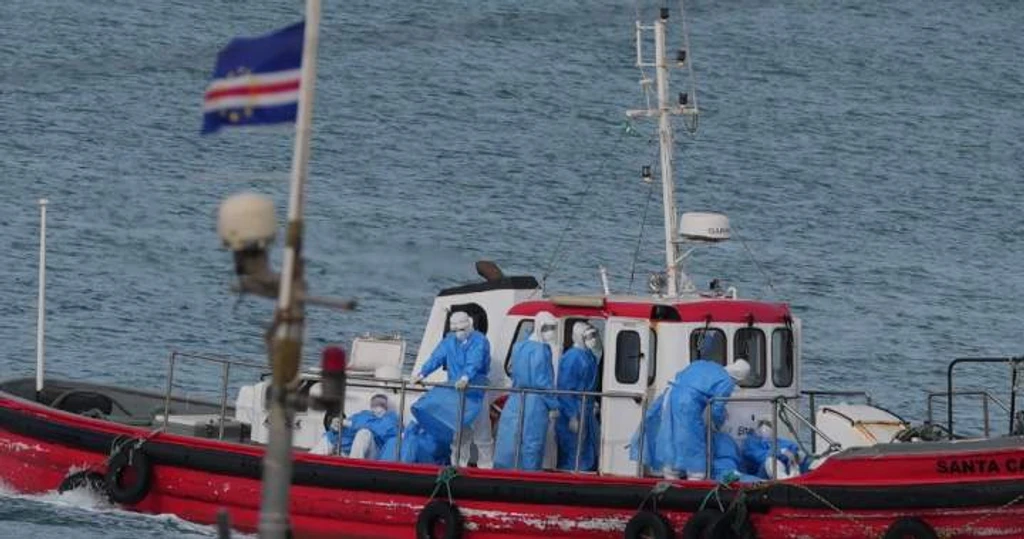
Two suspected cases of hantavirus have been reported: one in Spain, the other on the remote South Atlantic island of Tristan da Cunha, officials said Friday.
A 32-year-old Spanish woman who was on the same flight as a passenger who died of hantavirus is being treated in Alicante. Spain's Secretary of State for Health Javier Padilla said she was sitting two rows behind the deceased and had only brief contact. Others on that flight, including a Dutch flight attendant, tested negative.
The infected passenger had traveled from St. Helena to Johannesburg and died at a hospital on April 26. Her 70-year-old husband was the first person to die from the virus aboard the MV Hondius cruise ship on April 11.
On Tristan da Cunha, a British resident with a suspected case has been hospitalized. The World Health Organization has confirmed five cases and three suspected cases as health officials monitor passengers who disembarked from the MV Hondius.
WHO officials are developing operational guidance for safe disembarkation of passengers and crew, expected to reach Tenerife, Spain, on Sunday. The ship will anchor off Granadilla port, and passengers will quarantine at a Madrid military hospital under active monitoring.
The WHO said 2,500 diagnostic kits have been shipped from Argentina to five countries to strengthen testing capacity. Officials stressed the outbreak can be managed with standard public health measures, noting lessons from Argentina's 2019 outbreak.
Hantavirus typically spreads through inhalation of contaminated rodent droppings and, in rare cases, person-to-person transmission. Symptoms appear within one to eight weeks. There is no specific treatment, but early medical attention improves survival chances.
The United States is sending a plane to repatriate 17 citizens, while the UK will charter a flight for nearly two dozen British nationals. Canada confirmed three people with links to the cruise are isolating at home in Ontario and Quebec, asymptomatic.