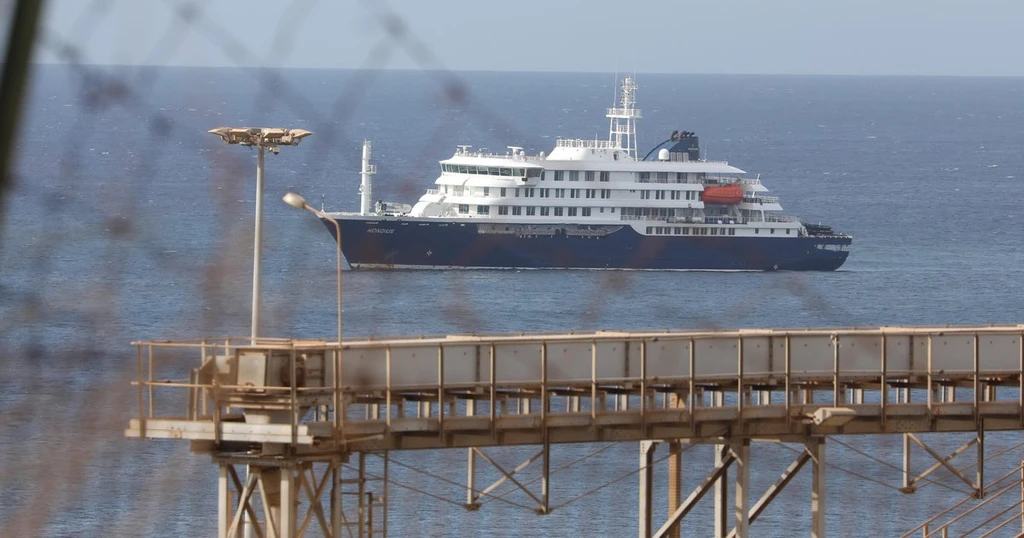
A deadly outbreak of hantavirus, specifically the rare Andes strain capable of human-to-human transmission, has been linked to the Dutch-flagged cruise ship M/V Hondius currently en route to Spain’s Canary Islands. Eight cases have been confirmed or are suspected, and three people have died.
Health officials worldwide are conducting contact tracing and isolation measures for passengers who disembarked in Saint Helena on April 24, as well as for individuals on a flight with a confirmed case. The World Health Organization said no one currently on the ship shows symptoms.
The first believed case is a 70-year-old Dutch man who died aboard on April 11. His 69-year-old wife left the ship in Saint Helena, died two days later in South Africa, and tested positive for the Andes virus. Before boarding, the couple had taken a bird-watching trip through Argentina, Chile, and Uruguay, where the rodent species carrying the virus is present.
A British passenger remains hospitalized in South Africa, improving after being critically ill. A German woman died aboard on May 2 after developing fever and pneumonia symptoms. Three individuals were evacuated to the Netherlands: a Dutch passenger and a British crew member with symptoms, both now stable, and an asymptomatic German passenger linked to the deceased woman. A Swiss man who disembarked in Saint Helena tested positive in Zurich and is receiving care.
The WHO is coordinating with at least 12 countries monitoring exposed citizens, including the U.S., where five states-Georgia, Texas, Arizona, Virginia, and California-are tracking individuals, none showing symptoms. In France, eight nationals who had contact with the Dutch woman on her flight are being monitored, with one showing mild symptoms.