Researchers have found that a human-safe drug, KCL-286, can repair DNA damage and reduce brain inflammation in mice genetically modified to develop Alzheimer's-like conditions.
Early in neurodegenerative diseases like Alzheimer's, DNA double-strand breaks in neurons are a serious problem. They occur at higher rates in patients and can trigger immune responses that inflame the brain's microglia, a process central to the disease.
A new study published in FEBS Open Bio tested KCL-286, an oral drug that crosses the blood-brain barrier. It was originally developed for nerve injuries and has already passed Phase 1 safety trials in healthy humans.
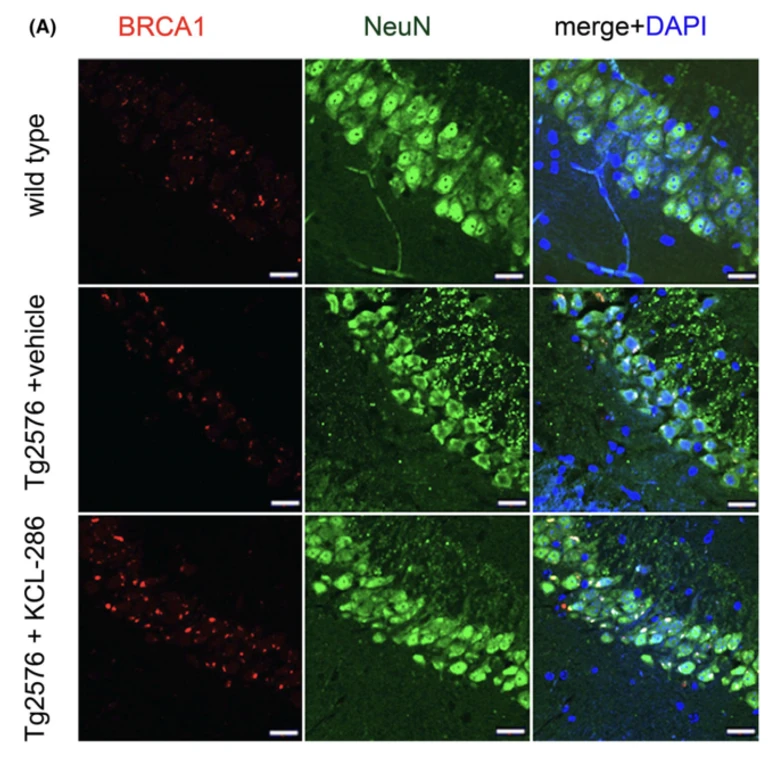
In the study, Alzheimer's-model mice (Tg2576) received injections of KCL-286 three times a week from 15 to 18 months of age. Compared to untreated mice, those receiving the drug showed greatly improved DNA repair, boosted by increased production of the BRCA1 repair factor.
The drug also calmed overactive microglia and appeared to have beneficial effects on astrocytes, restoring their appearance to a state similar to healthy mice.
"Our findings demonstrate that KCL-286 not only targets DNA damage but also reduces inflammation, two processes that occur very early in Alzheimer's disease progression," said neuroscientist Maria Goncalves from King's College London. "This highlights its potential as a disease-modifying therapy rather than simply addressing symptoms."
Because the drug's safety is already established in humans, researchers say this could dramatically shorten the timeline for new Alzheimer's drug development.