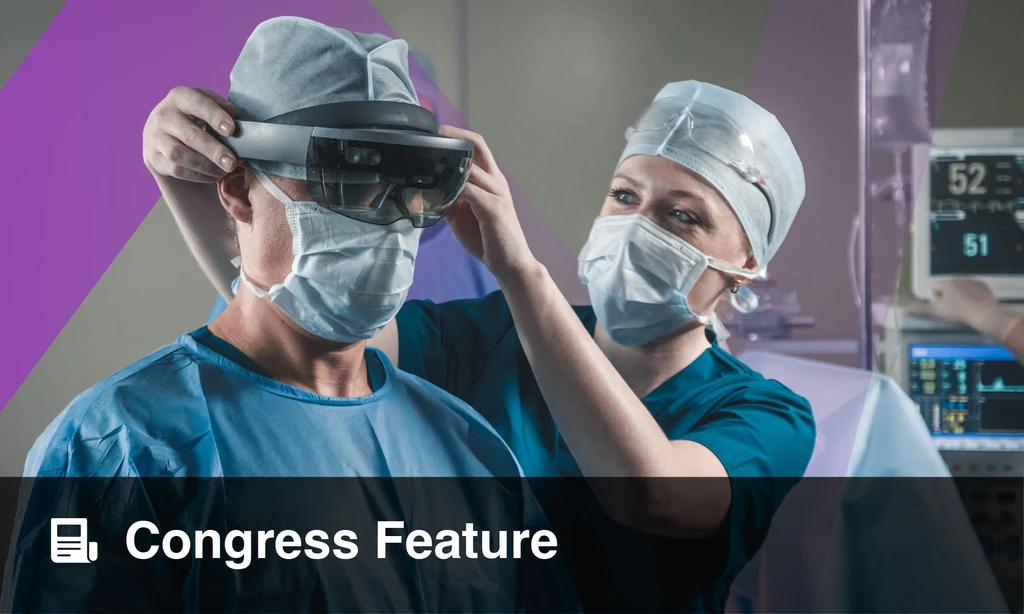
Interventional Radiology (IR) is undergoing a significant evolution, driven by advancements in augmented reality (AR), virtual reality (VR), robotics, and artificial intelligence (AI). Experts convened at the European Congress of Radiology (ECR) 2026 to discuss how these technologies are redefining the field.
Virtual reality offers immersive training environments for physicians, enabling risk-free practice of complex procedures like catheterization, and has shown to improve technical skills. Augmented reality, by overlaying digital information onto the real world, enhances visualization for procedures, surgical guidance, and radiation dose reduction. While AR shows promise, challenges in calibration, registration, and workflow integration remain.
Robotics in IR are primarily precision tools, not autonomous systems, requiring continuous human control. These systems enhance needle guidance, reduce radiation exposure, and offer potential for improved precision in biopsies and ablations. For vascular interventions, robotic assistance improves parts of the procedure but cannot yet fully replace manual skill. Systems like Microbot Medical's LIBERTY® and Sentante™ are simplifying workflows and enhancing control.
AI is transforming the IR toolkit by supporting lesion segmentation, procedural planning, and real-time tracking. AI-driven lesion segmentation automates tumor identification, reducing variability. While AI-guided planning shows potential, stereotactic-based planning remains more mature. AI offers solutions for motion modeling and real-time lesion tracking, though clinical impact is still being defined. Advanced AI applications include collision avoidance, vessel protection, and predictive coverage simulation, with studies demonstrating improved ablative margins and reduced local tumor progression.
The integration of these technologies promises more consistent, precise, and accessible care in interventional radiology, enhancing the capabilities of practitioners rather than replacing them.