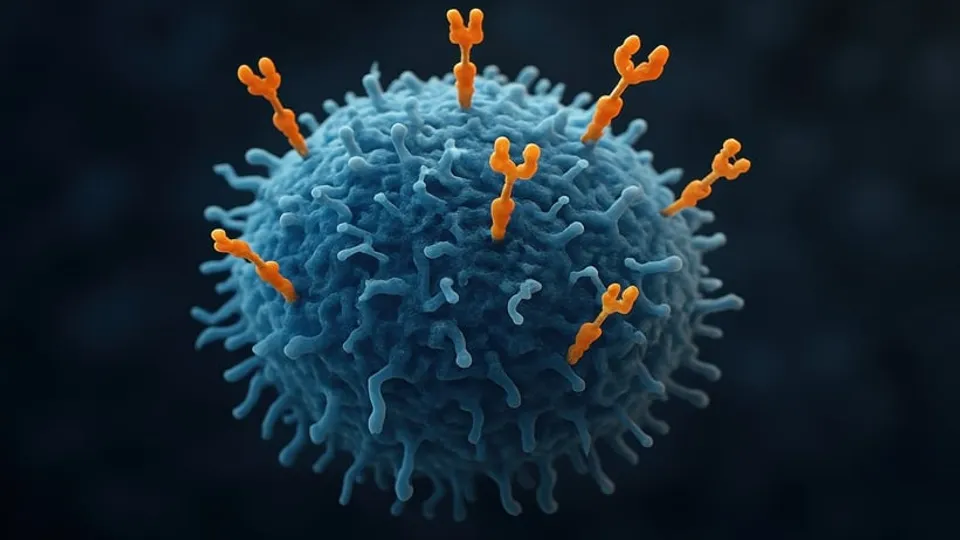
A comprehensive meta-analysis of 40 trials involving 1,540 patients indicates that CAR T cell therapy using a 4-1BB co-stimulatory domain targeting CD19 demonstrates the most favorable efficacy and safety profile for relapsed or refractory B cell precursor acute lymphoblastic leukemia. This groundbreaking research provides crucial comparative insights into construct design and clinical outcomes.
While CAR T therapy has revolutionized leukemia treatment, achieving high remission rates, durability remains a key challenge. This systematic review and meta-analysis found a pooled complete remission rate of 83.4%, with minimal residual disease negative complete remission reaching 92.7%.
Crucially, construct design significantly influenced these outcomes. Therapies incorporating a 4-1BB co-stimulatory domain achieved higher minimal residual disease negative remission rates compared to those using CD28: 94.0% versus 84.4% (p=0.048). This suggests a distinct advantage in response depth with 4-1BB based constructs.
Target selection also played a role, with therapies targeting CD19 alone or dual CD19 and CD22 showing superior results over CD22-targeted products alone. Furthermore, 4-1BB constructs were associated with a lower incidence of immune effector cell-associated neurotoxicity syndrome compared to CD28 designs, indicating a more favorable safety profile.
These findings strongly suggest that 4-1BB based CAR T cell therapy targeting CD19 offers the optimal balance of efficacy and safety for patients with relapsed or refractory B cell precursor acute lymphoblastic leukemia. As CAR T technology continues to advance, these comparative data are vital for informing clinical decisions and future therapeutic development in this high-risk patient population.