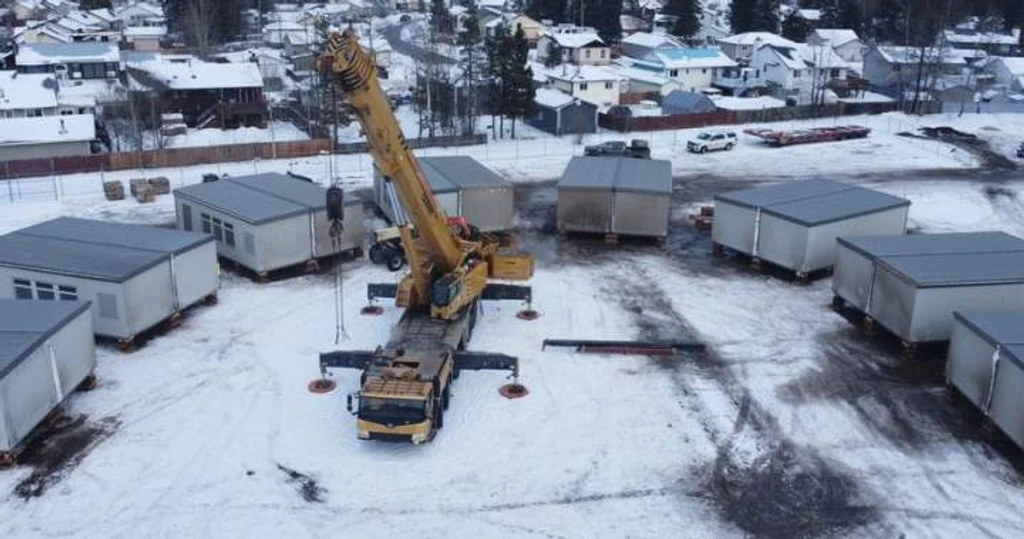
Temporary classrooms have been set up at Tumbler Ridge Elementary, a short distance from the secondary school where a mass shooting claimed six lives three weeks ago. While officials aim to restore routine, mental health experts caution against avoidance, highlighting the potential for long-term PTSD, depression, and anxiety.
Dr. Arash Javanbakht of Wayne State University emphasizes the need for expert screening and therapy to address trauma's ripple effects, such as substance abuse and social anxiety. He warns that permanent closure of the school might inadvertently reinforce avoidance behaviors.
Experts like Javanbakht and Amin Asfari of the University of Regina advocate for trauma-focused cognitive behavioral therapy and readily available group therapy for survivors, rather than immediate relocation.
The tragedy has underscored significant gaps in rural mental health care, with availability often dependent on location. Jonathan Morris of the Canadian Mental Health Association notes that while virtual care can bridge some gaps, it cannot replace in-person services. Mandated standards for care in smaller communities are seen as crucial.
Mayor Darryl Krakowka stressed the need for long-term, on-the-ground counseling, not just remote solutions. B.C.'s Health Ministry states supports are available, including a children's psychiatrist and clinicians, alongside RCMP Victim Services and additional clinicians from Northern Health. An inquest will examine the intersection of mental health and public safety systems in northern and rural B.C.