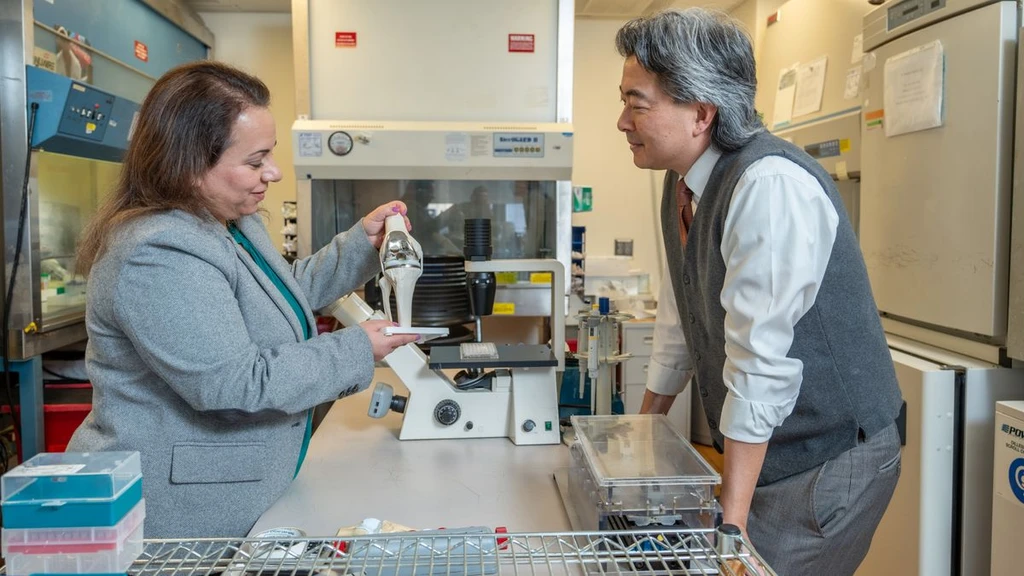
Researchers are pioneering a "living" knee implant designed to replace traditional metal and plastic prosthetics. Developed by teams at Columbia University and the University of Missouri, the NOVAKnee is a 3D-printed device featuring a biodegradable scaffold packed with stem-cell-derived bone and cartilage.
The concept is that the scaffold will dissolve over time, replaced by the patient's own new bone and cartilage, integrating seamlessly into the skeleton. This approach aims to overcome the 15-20 year lifespan limitation of current implants, offering a potential permanent solution, particularly for younger patients facing multiple revision surgeries.
Experiments in lab mice have shown promising results, with larger animal trials underway. Human trials are tentatively targeted for 2028, supported by the federally funded project Novel Innovations for Tissue Regeneration in Osteoarthritis (NITRO). The technology could also be adapted for other joints, potentially including the thumb, addressing a significant unmet need.
The implant can be seeded with the patient's own stem cells (autologous) or potentially with donor cells (allogeneic). Developers envision a future where these living implants become a permanent, integrated part of the patient's body, offering a more natural and lasting fix than current artificial joints.