
Osteoarthritis (OA) affects nearly 600 million people globally, yet treatments remain limited to symptom management. A significant reason for clinical trial failures has been the view of OA as a single disease. Research now defines OA as a highly heterogeneous, whole-joint disorder driven by distinct molecular pathways.
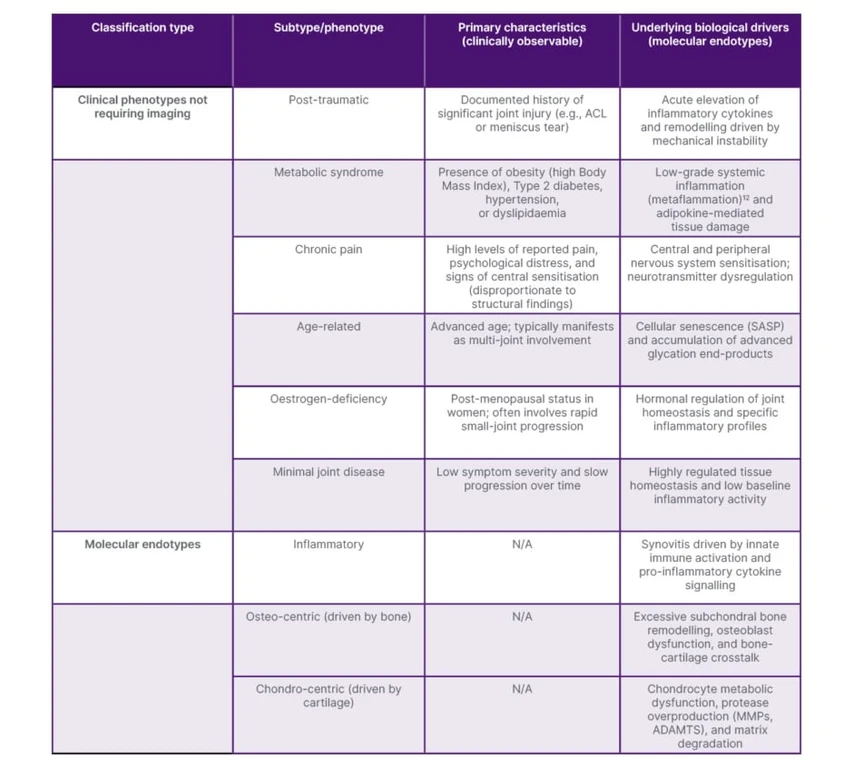
The priority has shifted to identifying 'molecular endotypes'-the specific biological drivers behind observed clinical symptoms. Scientists are combining neo-epitope biomarkers, cytokine profiling, and 'omics' technologies with machine learning to map these mechanisms. This approach, known as deep phenotyping, aims to stratify patients for clinical trials by matching therapies to the specific pathology of a subgroup.
Current treatments often fail because a drug's mechanism of action does not align with the disease driver in a heterogeneous test population. By employing phenotypic enrichment, researchers can exclude patients whose condition is driven by factors like mechanical instability when testing an anti-inflammatory drug. Advanced clustering algorithms applied to multi-modal datasets are working to define these therapeutic subtypes, or 'theratypes', increasing the likelihood of demonstrating drug efficacy and accelerating the development of disease-modifying interventions.