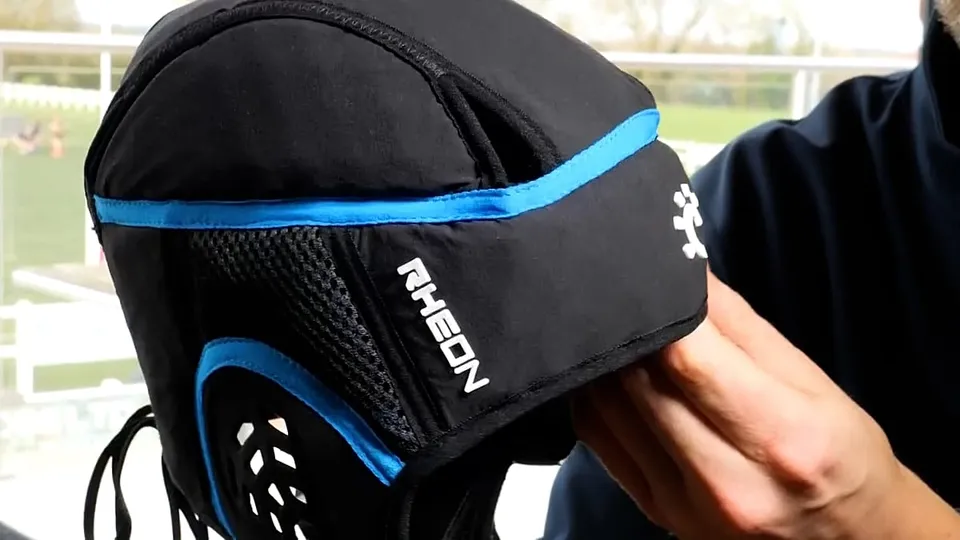
A groundbreaking super-polymer, originally developed for NASA, is poised to significantly enhance safety in rugby by absorbing impact energy and potentially reducing concussions.
Unlike American football, rugby players do not wear helmets, and existing protective headgear, known as scrum caps, primarily guards against abrasions and cauliflower ear, offering minimal protection against head impacts.
RHEON, a London-based company, has introduced a novel technology to address this critical safety gap. The material, a result of over 15 years of development at Imperial College, London, functions as a dynamic, non-Newtonian substance.
"It's a highly energy-absorbing material," explained Roman Chaika, RHEON's Development Director. "When it's in its natural state, it's soft and flexible, allowing for comfort. But during an impact, it suddenly stiffens to absorb that energy."
Lab tests demonstrate the material's efficacy, with RHEON claiming up to 34 percent lower peak rotational acceleration compared to existing materials when subjected to impacts simulating rugby collisions.
Centurion Safety has partnered with RHEON to integrate this advanced material into rugby head protection. "We recognised that the frequency of concussion in rugby is high," stated Nick Branston, Centurion Safety's Technical Director. "This material presented a clear opportunity to improve player safety."
Medical experts highlight the difficulty in diagnosing concussions during a match and warn of severe consequences from misjudged impacts. "If in doubt, sit it out," advised Dr. Mike Forsythe, a leading concussion specialist. "There are short, medium, and long-term risks, and tragically, unidentified concussions can be catastrophic."
Youth players have trialed the RHEON scrum cap, reporting positive experiences. "I took a knock in the game, but there wasn't any long-lasting effect," noted 17-year-old Tom Honan. The RHEON scrum cap, developed in line with World Rugby Union guidelines, is expected to launch by year-end, priced under £100.