
For millions of people, statins are a daily shield against heart disease. But about 10 percent of those who take them experience a mysterious, painful side effect that causes many to discontinue these potentially life-saving medicines.
Research from Columbia University and the University of Rochester has revealed a potential culprit: a tiny calcium gate inside muscle cells that statins may force open. The resulting calcium leak can damage muscle tissue, explaining a portion of statin-associated muscle symptoms (SAMS).

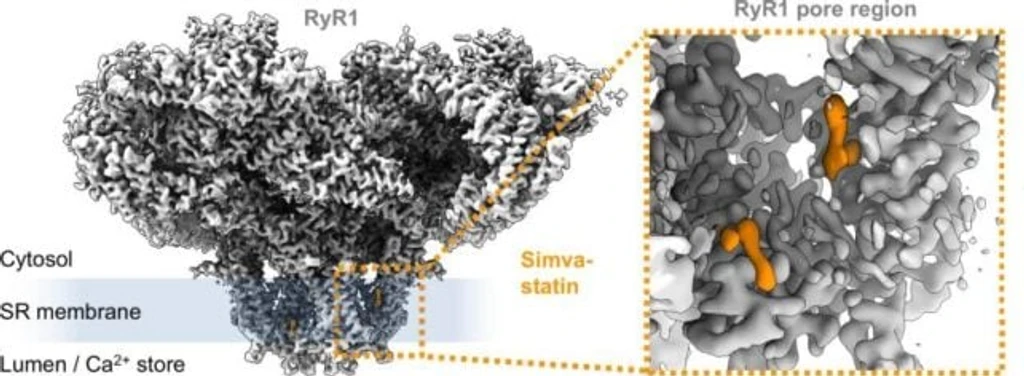
Statins work by blocking an enzyme required for cholesterol biosynthesis in the liver. But they also affect an off-target protein called ryanodine receptor 1 (RyR1). This mushroom-shaped channel, or gate, sits on the sarcoplasmic reticulum, a web-like structure surrounding muscle fibers. RyR1 acts like a bouncer at a club, opening or closing the door to let calcium ions flow into muscles, an essential process for muscle contractions.
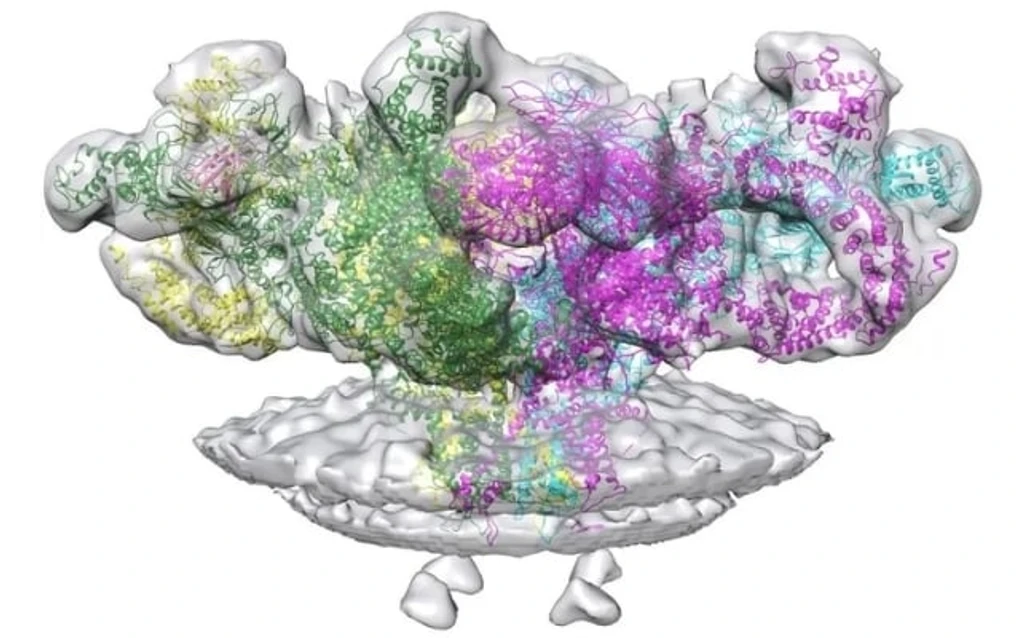
Using mice as models, the researchers observed how statins bind to RyR1 via cryo-electron microscopy (cryo-EM). Cholesterol-lowering drugs like simvastatin may keep these gates open, allowing calcium ions to leak into muscle cells. This can either directly damage muscles or trigger enzymes that degrade them, leading to persistent pain, weakness, tenderness, and cramps.
The issue is exacerbated in individuals with RyR1 mutations, who may also experience episodes of malignant hyperthermia or weakness in the diaphragm. In rare cases, the side effects can induce rhabdomyolysis, a serious syndrome where muscle tissues rupture and leak into the bloodstream.
Around 40 million adults take statins in the US alone, and approximately 10 percent experience SAMS. The researchers highlight two promising options: redesigning statins so they don't bind to RyR1 but still inhibit cholesterol production, or using an experimental drug called Rycal, which closed the leaky gates in statin-intolerant mice.
Lead author Andrew Marks notes, "It is unlikely that this explanation applies to everyone... but even if it explains a small subset, that's a lot of people we could help." The research was published in the Journal of Clinical Investigation.