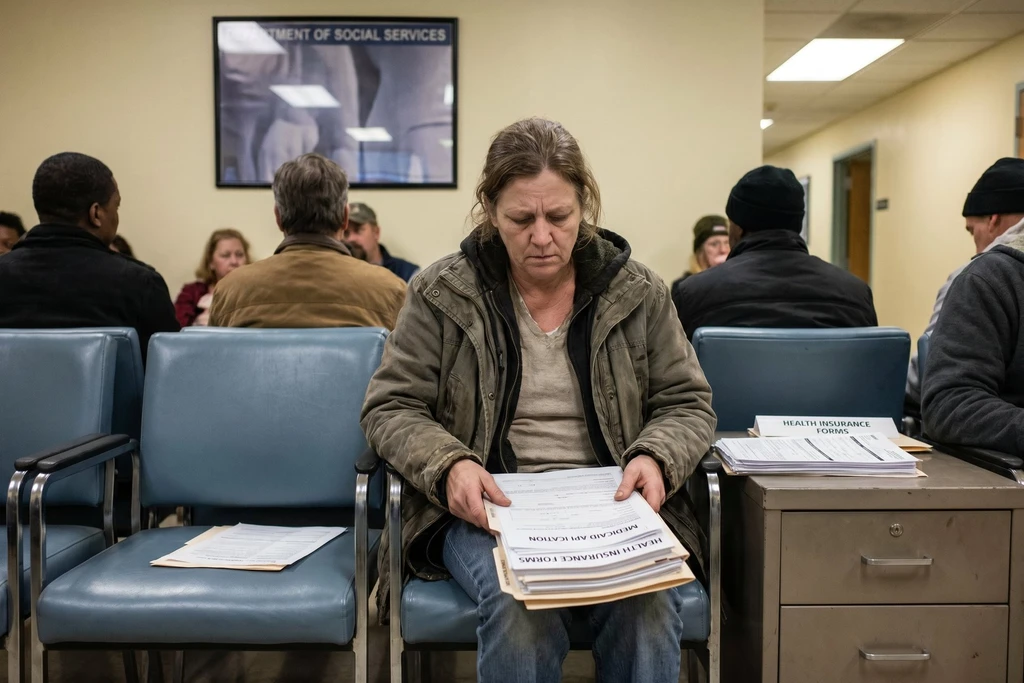
Nebraska is set to become the first state to implement a Medicaid work mandate on May 1, requiring certain enrollees to work, train, or attend school to maintain coverage. Despite state officials' assurances of an easy compliance process, affected individuals and policy experts express significant optimism.
Schmeeka Simpson, a Nebraska resident relying on Medicaid since 2014, worries about losing her health coverage. Having experienced issues with other government assistance programs, she distrusts the state's ability to manage the new work rules smoothly, stating, “Adding more barriers won’t make the program work any better.”
Nebraska Medicaid director Drew Gonshorowski maintains that the state's priority is ensuring members understand the changes to keep their coverage, noting exemptions for those with qualifying health conditions. However, health policy analysts and advocates for low-income individuals fear thousands could lose essential healthcare access and face medical debt.
Jeremy Nordquist, president and CEO of the Nebraska Hospital Association, echoed these concerns, highlighting the potential negative impact on hospital finances due to an increase in uninsured patients. He added, “There is a lot of concern on many different levels.”
The federal law, signed last year, mandates that 42 states and the District of Columbia implement work requirements for Medicaid expansion enrollees by 2027. The Congressional Budget Office estimates 4.8 million people could become uninsured nationwide as a result.
Nebraska is implementing the rule eight months early, affecting approximately 70,000 enrollees. State officials claim 72% will not need to take action, as their work or exemption status is already known. However, the lack of additional staff to manage the implementation raises questions about its feasibility.
While Nebraska plans to allow self-attestation for work or exemption status without requiring supporting documentation, federal officials have expressed reservations about relying solely on self-reporting. Previous implementations in Arkansas and Georgia saw significant coverage losses, largely due to administrative and paperwork failures rather than non-compliance with work requirements.
Studies indicate that a substantial portion of individuals at risk of losing coverage due to these mandates have physical or mental health conditions, suggesting these are not simply able-bodied adults choosing not to work. In Nebraska, roughly two-thirds of Medicaid expansion enrollees already participate in work or school, and the state's unemployment rate is exceptionally low.