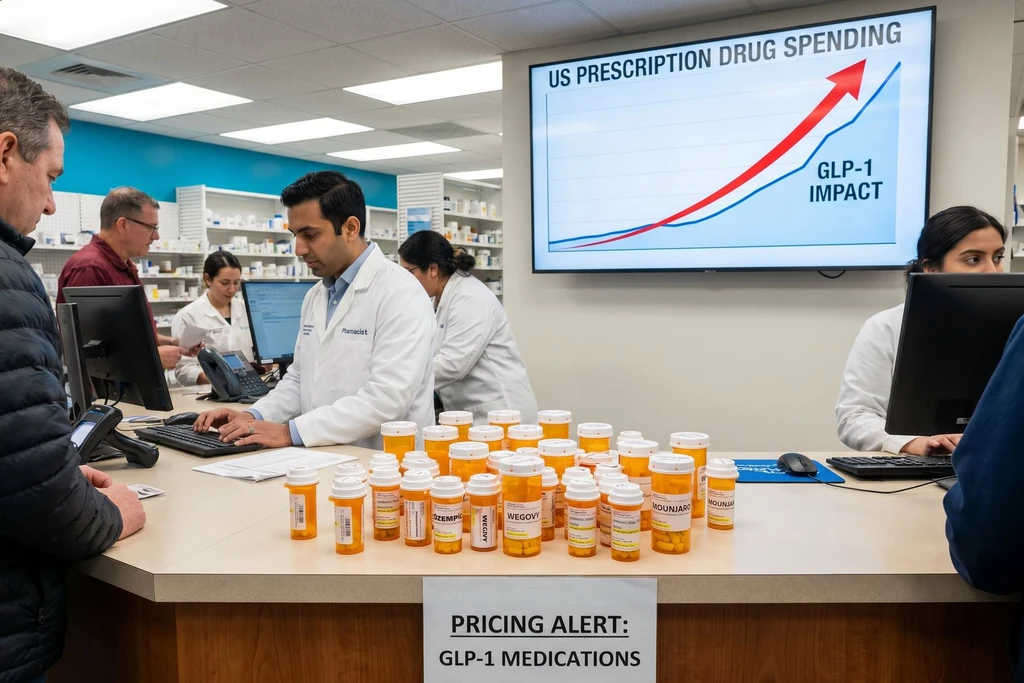
U.S. spending on prescription drugs surged nearly 13% in 2025 to $915 billion and is projected to cross the $1 trillion mark in 2026, according to a new report from the American Society of Health-System Pharmacists.
The primary driver: the explosive popularity of GLP-1 weight-loss and diabetes drugs.
Eli Lilly’s tirzepatide-sold as Zepbound and Mounjaro-is now the top-selling drug in the country, generating nearly $63 billion in wholesale purchases last year. Novo Nordisk’s semaglutide, marketed as Wegovy and Ozempic, ranked second with over $59 billion in sales. By comparison, the third-ranked drug, the blood thinner Eliquis, brought in $29 billion.
Lilly and Novo have been cutting prices to attract cash-paying customers, while nearly half of employer insurance plans now cover these anti-obesity medications. Medicare also launched a bridge program starting July 1, offering GLP-1 coverage for weight loss with a $50 monthly copay.
The rise is not just about price. The ASHP report notes that higher utilization-more patients using more drugs-accounts for the majority of the spending increase, with drug price hikes contributing only about 1%.
Cancer drugs remain the largest category in clinic and hospital spending, led by Merck’s Keytruda. Meanwhile, Medicare’s new $2,100 out-of-pocket cap on Part D drug costs, part of the Inflation Reduction Act, may be encouraging use of higher-cost medications.