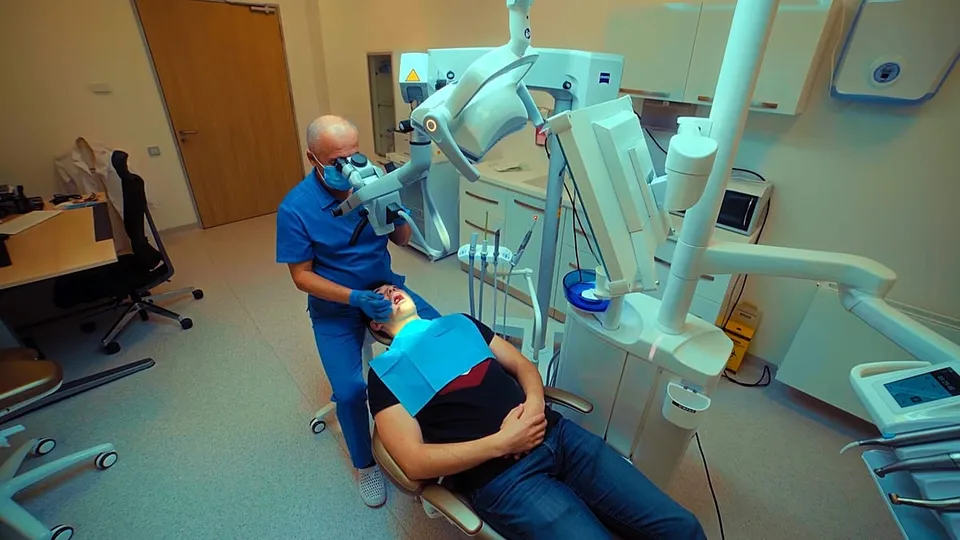
Uzbekistan is undertaking a significant healthcare modernization as part of its "Uzbekistan-2030" strategy, investing billions to upgrade infrastructure, expand services, and foster private-sector growth.
The implementation of the unified national electronic information system, DMED, has digitized the medical data of nearly 37 million citizens, issuing a single electronic medical card (MED-ID). This system centralizes patient records, simplifies appointment booking, and facilitates electronic prescriptions through a mobile application, enhancing patient-provider interactions.
"The digital system allows for more efficient access to patient information and better coordination between hospitals and primary care facilities," stated Deputy Minister of Health, Olim Omonov.
In Tashkent, digitalization has reduced paper costs and halved laboratory procedure times, allowing doctors to dedicate more time to patients. "Maximum consultation time per patient has dropped from 30 minutes to just 17 minutes," noted Shoira Abdusattorova, Head of the Yunusobod Medical Association.
Looking ahead, plans include launching over ten AI-based healthcare projects and training more than 200,000 specialists to effectively utilize the new systems.
The National Children’s Medical Center, supported by South Korea, now performs complex pediatric surgeries, including liver and bone marrow transplants, previously only available abroad. The center has achieved Joint Commission International (JCI) accreditation, becoming the first public medical institution in Uzbekistan to reach this global benchmark.
"For the first time, we performed bone marrow transplants for children with cancer locally. Families no longer need to travel abroad, paying tens of thousands of dollars," said the center's director, Baxtiyorjon Umarov.
Uzbekistan's private healthcare sector has seen substantial growth, with the number of clinics more than tripling to over 9,000, now accounting for 30-35% of healthcare services. Public-private partnerships are driving this expansion, with initiatives supported by the International Finance Corporation.
M-Clinic, a large multispecialty center in Tashkent, offers over 1,000 medical services across more than 20 specialties and provides accommodation for out-of-town patients.
Uzbekistan is positioning itself as a regional medical hub, attracting international investment for projects such as a multidisciplinary clinic with Cleveland Clinic.
Medical education is also being restructured to meet international standards, with Tashkent State Medical University and Urgench State Medical Institute offering integrated, internationally accredited programs. Key innovations include advanced simulation centers that utilize artificial intelligence and digital technologies for hands-on student training.
Regional healthcare is also improving, with the establishment of 231 maternity complexes and 46 inter-district perinatal centers. AI-assisted retinal cameras are being used to screen premature infants in remote regions, and genetic and congenital disorder screenings are now standard for all newborns.
"Since 2026, all newborns undergo genetic and congenital disorder screenings at the district and town level, covering over 900,000 annual births," confirmed Deputy Minister of Health, Elmira Bositkhonova.