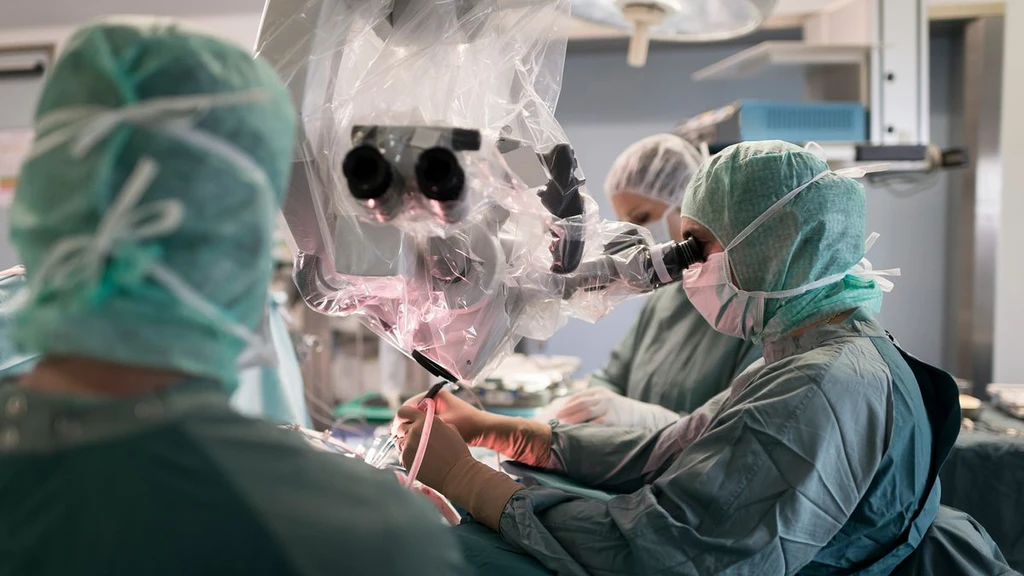
At a facility in Arizona, over 150 heads are reportedly stored in cryogenic chambers, preserved for future revival. But with no current ability to revive a frozen brain, the question remains: why can't we just attach a fresh head to a new body?
Dr. Max Krucoff, a neurosurgeon at the Medical College of Wisconsin, calls it a 'body transplant,' since your identity resides entirely in your brain.
Even partial swaps are out of reach. The cerebellum alone contains millions of specialized Purkinje cells, each connected to thousands of others. The complexity is beyond our medical capacity.
Has It Been Attempted?
Head transplants on animals date back to the early 1900s, but most survived only days. In 1970, Dr. Robert J. White transplanted monkey heads, enabling chewing and swallowing, but none lived past nine days.
Italian surgeon Sergio Canavero proposed a human head transplant in 2013, facing backlash on ethical and scientific grounds. His 2017 announcement of a human cadaver head transplant was called 'a despicable fraud' by NYU bioethicist Arthur Caplan.
A Future with Stem Cells?
While full brain transplants remain impossible, stem cell and organoid grafts may one day repair damaged tissue. Stem cells derived from a patient could lower rejection risk.
Trials for Parkinson’s, stroke, and spinal cord injury are underway, but none are FDA approved. The challenge remains making cells integrate correctly without forming tumors or disrupting circuits.