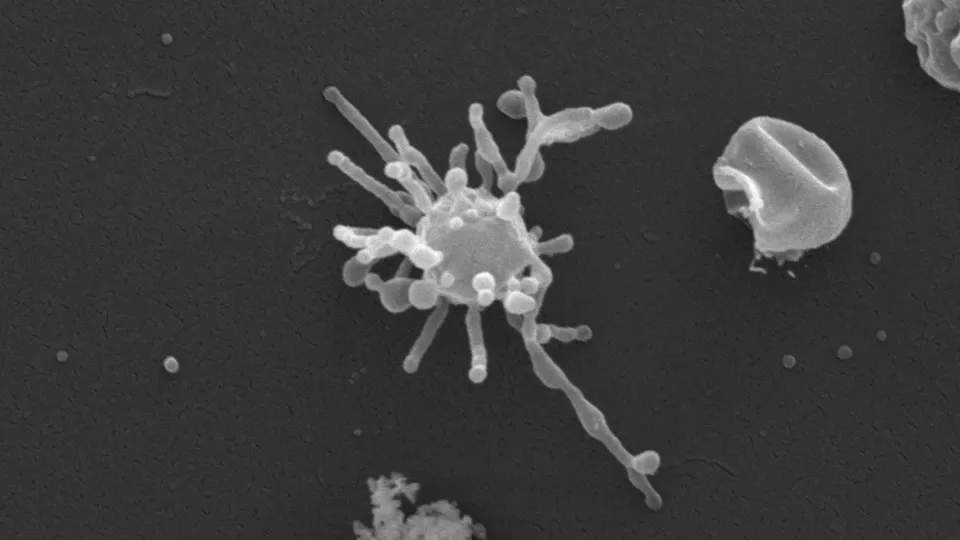
Billions of years ago, before Earth's atmosphere was rich in oxygen, a group of ancient microbes known as Asgard archaea may have already evolved to use the gas. This discovery offers a new perspective on the origins of complex life.
A recent genetic survey of ocean mud and seawater found evidence that Asgard archaea, considered the closest microbial relatives to plants and animals, possess the molecular machinery to handle oxygen and potentially use it for energy. While many Asgards studied were previously associated with oxygen-poor environments, this new research suggests the hosts in the critical microbe-bacterium relationship that led to complex cells may have tolerated oxygen better than believed.
"Most Asgards alive today have been found in environments without oxygen," stated study co-author Brett Baker, an associate professor at the University of Texas at Austin. "But it turns out that the ones most closely related to eukaryotes live in places with oxygen... and they have a lot of metabolic pathways that use oxygen. That suggests that our eukaryotic ancestor likely had these processes, too."
Asgard archaea, discovered in 2015, carry genes that indicate a close ancestral link to eukaryotes - organisms with complex cells containing a nucleus. Researchers analyzed environmental DNA from marine sediments, rebuilding thousands of microbial genomes. They identified genes linked to aerobic respiration, the oxygen-powered process for energy production.
One branch, Heimdallarchaeia, showed significant genetic components for moving electrons and generating energy with oxygen, alongside enzymes that manage toxic oxygen byproducts. This finding supports the theory that if these oxygen-handling abilities were present in the archaeal ancestor of complex cells, it simplifies the evolutionary pathway to eukaryotes.