Colombia's Supreme Court denied a cassation appeal, citing AI-generated content. However, the court's own ruling was subsequently flagged by the very AI detection tool used in its decision, raising questions about the technology's reliability.
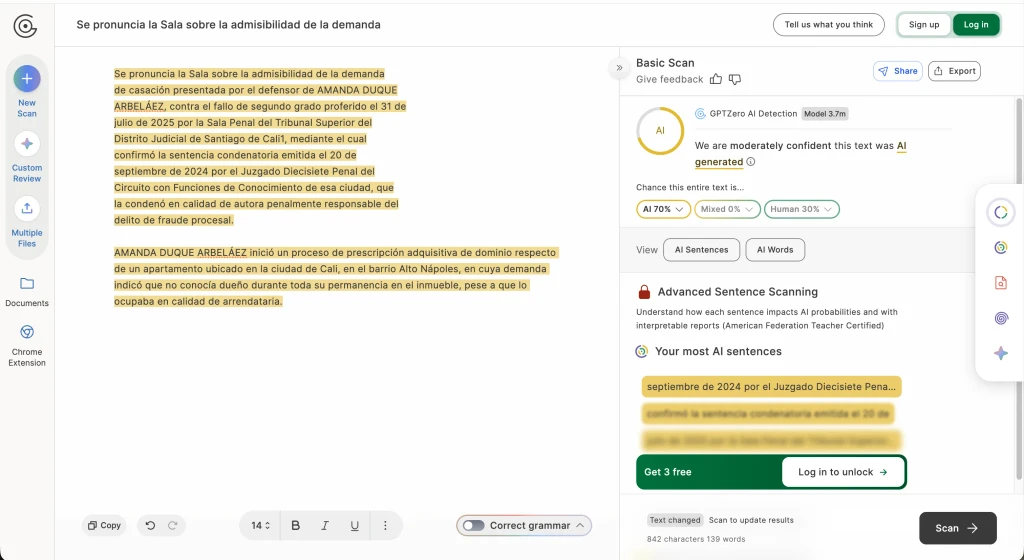
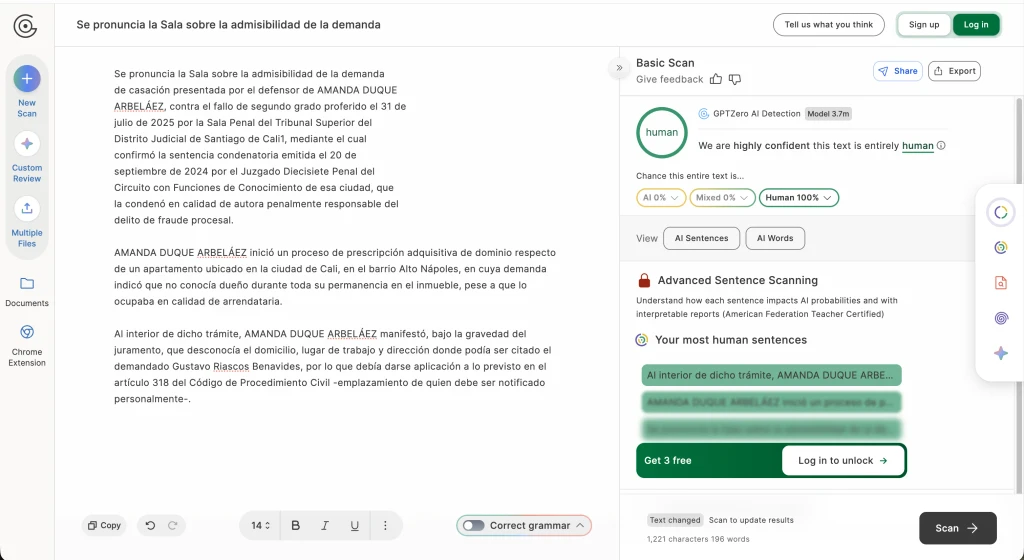
After submitting the attorney's brief to the Winston AI tool, the court concluded it contained only 7% human content, leading to the dismissal of the appeal. Yet, when the court's own ruling was analyzed by legal experts using similar tools, it reportedly showed a 93% AI-generated text result. This inconsistency has highlighted the methodological fragility of relying on AI detectors as definitive proof.
Further tests by legal professionals yielded varied and often contradictory results. GPTZero initially scanned the court's verdict, returning a 100% AI result. However, a longer version of the same text processed by the same tool later returned a 100% human result. Other analyses of older legal documents and academic theses also produced improbable high AI scores.
Experts point to the technical limitations of AI detectors, which measure statistical patterns like sentence length and vocabulary predictability. These patterns can be shared by formal legal prose, academic writing, and texts by non-native English speakers, leading to frequent false positives.
Studies have corroborated these findings, with a 2023 study in Patterns showing over 61% of TOEFL essays by non-native speakers incorrectly flagged as AI-generated. Even major platforms like Turnitin have acknowledged higher false positive rates, and OpenAI had to remove its own AI detection tool due to inaccuracies. Universities like Vanderbilt and the University of Arizona have disabled such features due to unreliable performance.
Colombia's judicial branch has adopted formal guidelines regulating AI use, permitting it for administrative tasks but requiring careful human review for sensitive legal work. These guidelines explicitly prohibit AI from evaluating evidence or making judicial decisions, reinforcing human responsibility. The Supreme Court has not yet commented on the backlash.