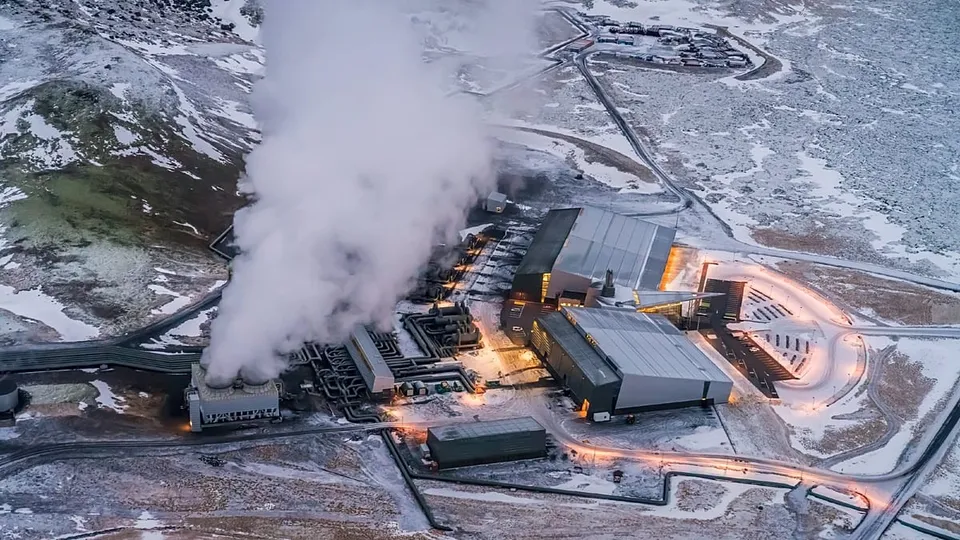
New advancements are unlocking vast geothermal electricity potential across Europe, offering a critical solution to reduce the continent's dependence on fossil fuels. A recent analysis by the Ember think tank indicates that 43 gigawatts of enhanced geothermal capacity could be developed at costs comparable to coal and gas generation.
This potential could yield approximately 301 terawatt-hours of electricity annually, meeting nearly half of the EU's current coal and gas-fired generation. Globally, geothermal energy is projected to meet up to 15 percent of electricity demand growth by 2050. However, the report cautions that Europe risks falling behind in this renewable sector due to slow and inconsistent deployment.
Advances in drilling and reservoir engineering are enabling enhanced geothermal systems (EGS) to provide scalable, clean power. Unlike traditional geothermal plants confined to specific geological regions, EGS involves deep drilling into hot rock, injecting fluid, and then extracting heated fluid to generate electricity. This modern approach makes geothermal power cost-competitive even outside high-temperature zones.
Ember's assessment highlights that continental Europe possesses a techno-economic potential for geothermal power reaching around 50 gigawatts. Within the EU, Hungary holds the largest share with approximately 28 gigawatts of untapped geothermal energy, followed by Türkiye with 6 gigawatts, and Poland, Germany, and France each with around 4 gigawatts. Geothermal power offers the advantage of being insulated from fuel price volatility and carbon cost increases, providing a stable, low-carbon electricity source.
While geothermal projects began in Europe in the early 2000s, lengthy permitting and inconsistent national support have hindered commercial rollout. In contrast, projects in the United States and Canada are scaling up, with North America's planned geothermal pipeline now surpassing Europe's. Delayed deployment risks ceding learning effects, supply chain development, and cost reductions to other regions, potentially increasing future costs for European projects.