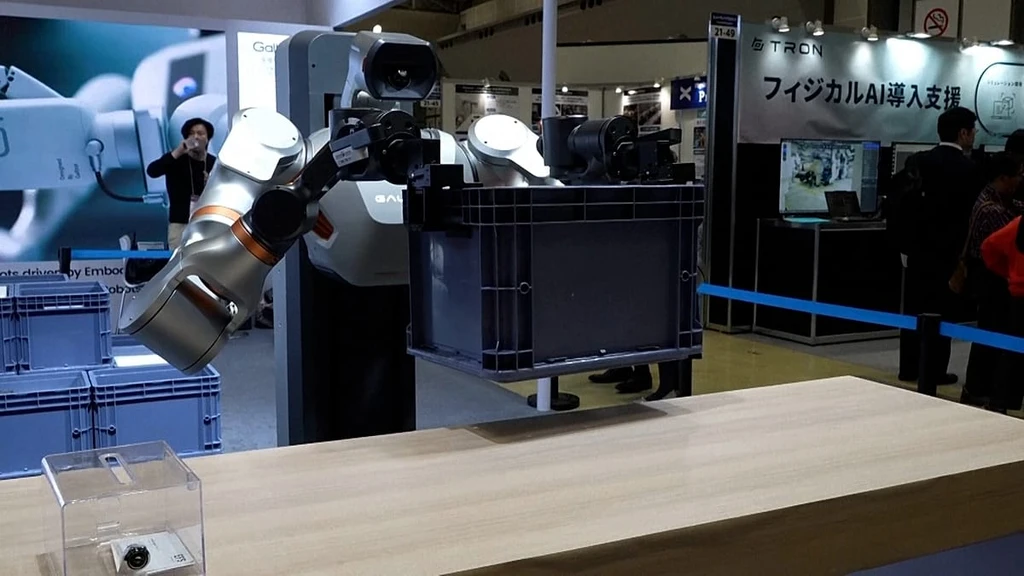
Japan is intensifying its efforts in the global humanoid robotics race, prioritizing software and data development. At Tokyo's Humanoid Robot Expo, a Japanese robot named Galbot demonstrated its capabilities, highlighting a contrast with the dominance of Chinese-developed robots.
While China accelerates humanoid robot development as part of its national strategy, Japanese firms are carving out a niche in 'physical AI.' This involves creating sophisticated data infrastructure and software enabling robots to operate effectively in real-world environments.
Companies like FastLabel are crucial in this push, focusing on generating high-quality training data for robot AI models. This is vital for advancing robot capabilities beyond simple tasks, such as complex object manipulation, which remains a significant challenge.
Experts note that the true potential of humanoid robots lies in their ability to perform practical roles, especially in industries facing labor shortages. Japan, with its aging population and workforce challenges, sees humanoid robots as a potential solution for both industrial applications and home assistance.
Organizers emphasize that the goal is for these robots to work alongside humans, fostering acceptance and viewing them as collaborative partners rather than replacements.