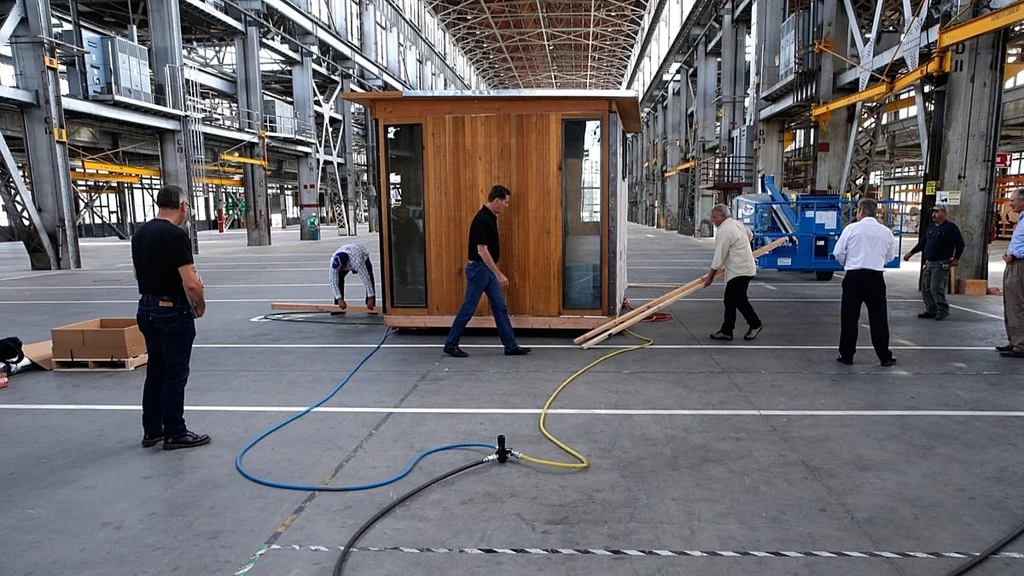
Governments have exhausted most quick solutions, and the construction industry is struggling to modernise. Modular construction, which prioritises factory-based building, could be part of the solution.
The EU faces a shortfall of up to 10 million housing units. Germany needs 400,000 new homes a year but is far from meeting that target. France has 2.8 million households on social housing waiting lists. The Netherlands must build around 1 million homes by 2031. And across the bloc, actual construction is meeting only about half the required pace.
Modular construction, where homes are built in factories and assembled on-site, is gaining serious political and industrial traction.
This type of construction offers important advantages over traditional methods. Projects can be completed 50 to 90 percent faster, with less waste and lower carbon emissions. Given chronic labour shortages in Europe's construction sector, the ability to move skilled work indoors and scale production is crucial.
Sweden leads the sector, with approximately 45 percent of new housing built using offsite or modular methods. Germany is the second largest market, with 26 percent of new single and two-family homes prefabricated in 2024. The Netherlands is rapidly expanding modular construction to meet its goal of building 1 million new homes by 2031.
Spain, Portugal, and Poland are emerging markets for modular construction, driven by simpler regulations and government incentives. However, national building codes vary considerably, creating barriers to cross-border trade and scaling.
The EU is addressing this through Digital Product Passports, which streamline compliance checks and reduce approval times. Yet, fragmented regulations remain a major obstacle.
Modular construction is not a complete solution to Europe's housing crisis. However, it offers a promising approach to accelerate housing supply without requiring additional workers, land, or extended timelines.