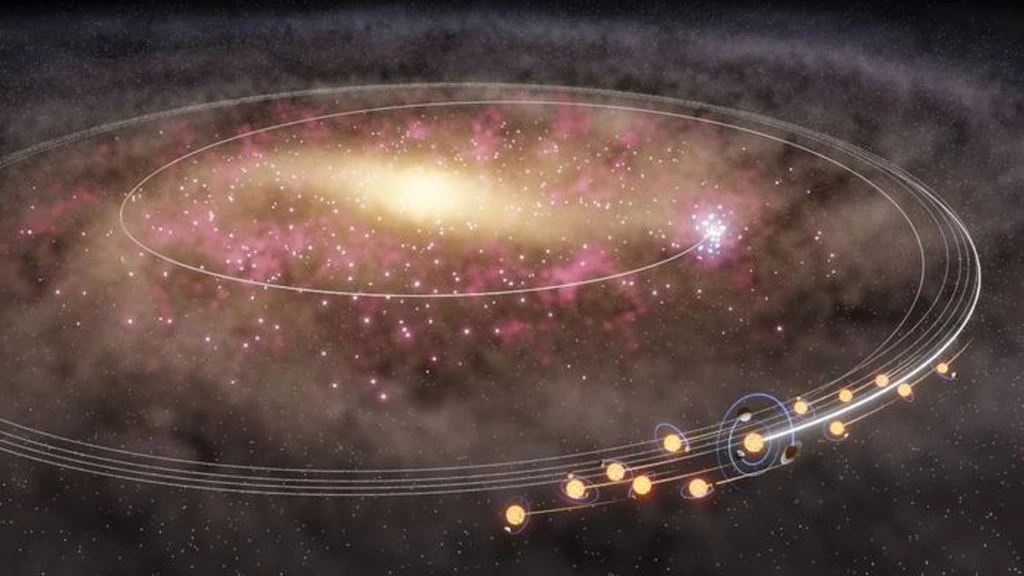
Researchers have identified thousands of sun-like stars, dubbed "solar twins," suggesting a "mass migration" from the Milky Way's galactic center billions of years ago. This exodus, driven by the formation of the galaxy's central bar, may have moved our sun to a quieter, life-friendly region.
The study, utilizing data from the Gaia space telescope, analyzed 6,594 solar twins. These stars share similar ages, temperatures, compositions, and surface gravities with our sun, and their presence in the solar system's neighborhood indicates a significant outward movement from the densely populated galactic core.
Scientists propose that the formation of the Milky Way's central bar, estimated to have occurred between 4 and 6 billion years ago, not only spurred star formation but also initiated this large-scale stellar migration. This event could explain how the sun, and potentially Earth, ended up in an environment conducive to life, rather than remaining in the more volatile galactic center.