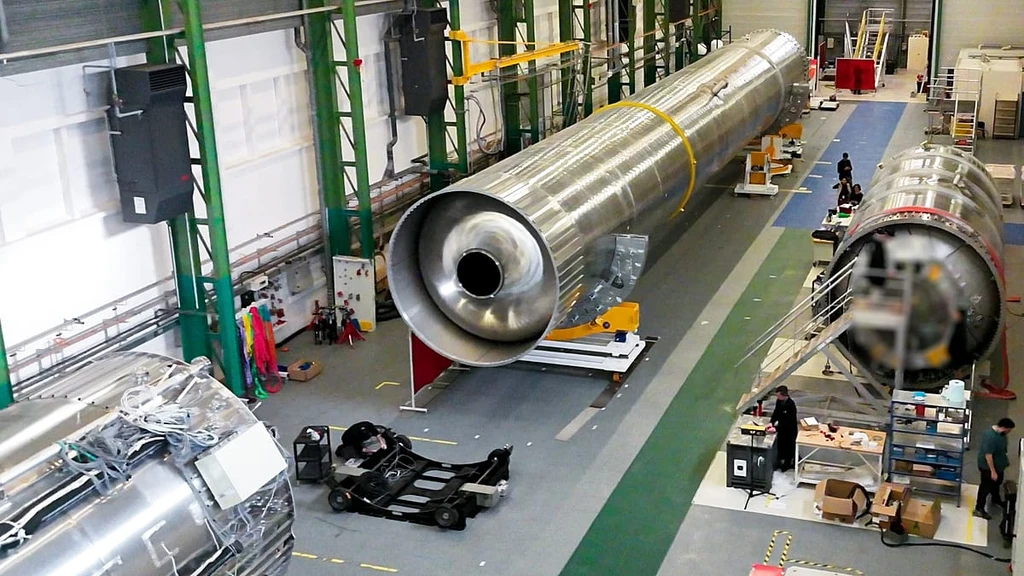
MaiaSpace is assembling and testing Europe’s first reusable mini-launcher in Vernon, Normandy. This project is currently the most advanced of its kind on the continent, with its first flight slated for early 2027. A subsidiary of ArianeGroup, MaiaSpace has already secured commercial contracts.
The Maia launcher's first stage, approximately thirty meters long, is designed for recovery, mirroring Space X's established technology. This initiative marks Europe's effort to bridge the gap in reusable rocket capabilities.
Europe currently lacks vertical first-stage recovery technology, positioning Maia as a potential forerunner for future heavy-lift European launchers. The Maia rocket is designed for a minimum of four reuses, a strategy intended to reduce costs and lower satellite transport prices. It will be capable of carrying satellites up to four tonnes into low orbit, catering to the growing market for small satellites used in Earth observation and telecommunications.
The development of a European reusable mini-launcher represents a strategic shift in the continent's space industry economics. MaiaSpace CEO Yohann Leroy notes the industry's transformation driven by technological advancements and cost reductions, enabling the conversion of niche markets into mass markets. He emphasizes the need to launch satellites at a significantly lower cost than in previous years.
Leroy highlights that Europe missed an earlier economic opportunity in reusable launchers due to misjudgments. However, MaiaSpace is now actively developing the necessary technologies. The company's competitive goal is to match the cost per kilogram achieved by SpaceX's Falcon 9. To remain competitive, MaiaSpace is accelerating its rocket development for a sustained launch rate for both institutional and private clients. Europe is pursuing a dual strategy, combining its Ariane 6 mega-rocket with MaiaSpace's reusable mini-launchers to ensure its presence in space.