
OpenClaw, an open-source autonomous AI agent framework, surged past 300,000 GitHub stars in months, transforming from a developer experiment into a widely deployed digital assistant. It reads messages, executes commands across Slack, WhatsApp, and Discord, and automates high-privilege tasks.
But its explosive growth exposed dangerous architectural flaws. The central gateway treated local browser access as trusted authentication-allowing attackers to bypass security entirely. Once compromised, it granted full control over file systems, messaging platforms, and connected devices.
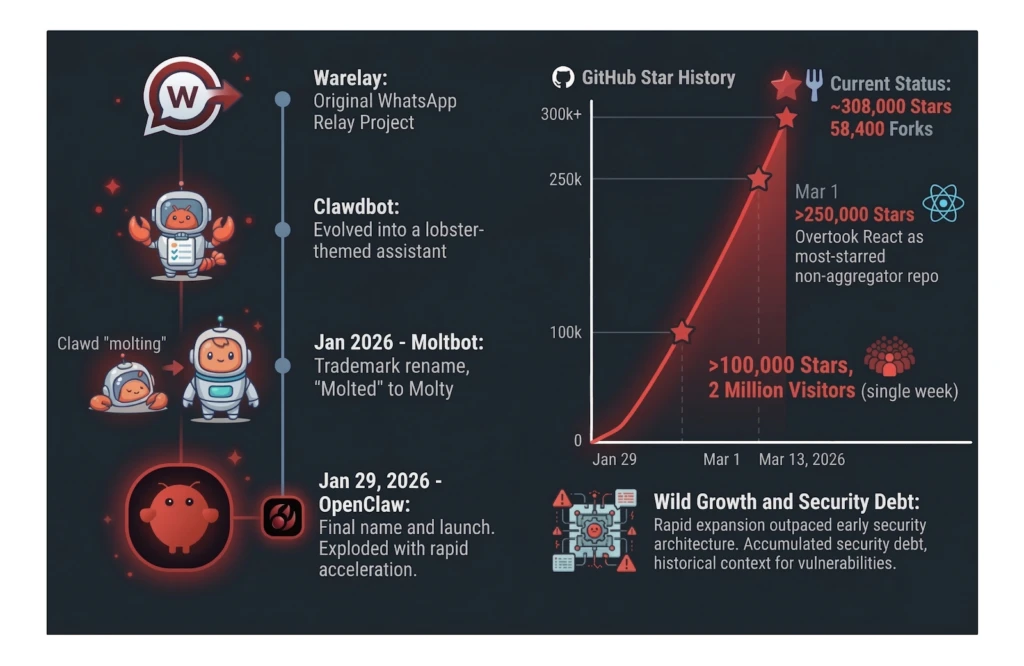
Identity validation failed repeatedly. Mutable identifiers like usernames were used for access control, enabling spoofing. Authorization logic varied across 20+ integrated platforms, creating exploitable gaps.
Execution sandboxes were inconsistently enforced. Attackers bypassed restrictions using subtle command variations. Child processes operated outside security boundaries, enabling privilege escalation.
Sensitive data-credentials, memory, chat histories-was stored locally with fragmented validation, leading to path traversal and sandbox escapes. Malicious plugins, disguised as legitimate tools, operated within the core process, manipulating agent behavior through natural language.
Thousands of instances were exposed publicly with sandboxes disabled and permissions overprivileged. Prompt injection attacks embedded hidden commands in emails and documents, manipulating the AI without triggering traditional detection systems.
OpenClaw’s case proves autonomous AI agents demand a new security paradigm-no longer just applications, but high-risk digital agents requiring strict privilege controls, continuous monitoring, and system-wide policy enforcement.