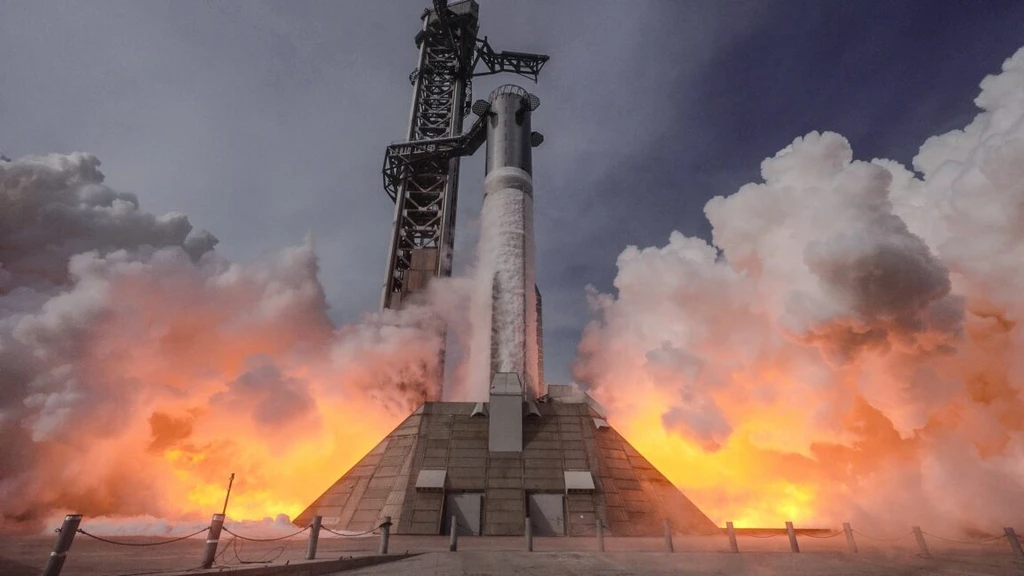
SpaceX has successfully test-fired the engines of its next-generation Starship V3 and its Super Heavy booster at Starbase, Texas. This marks a significant step towards the vehicle's first launch, which is targeted for early or mid-May. The Starship V3 features higher-thrust Raptor engines and is crucial for demonstrating in-orbit refueling capabilities, a prerequisite for its role as a lunar lander for NASA's Artemis program.
Meanwhile, Blue Origin is preparing for the third flight of its New Glenn rocket from Cape Canaveral, Florida. The launch, scheduled for April 19, will feature a reused booster, a key milestone for the company. The company has also been selected by the US Space Force for potential operations at Vandenberg Space Force Base, California, signaling future heavy-lift capabilities.
The European Space Agency (ESA) is taking tentative steps towards independent human spaceflight. It has opened proposals for a Crew Launch Abort Demonstrator project, focusing initially on modeling abort scenarios with an Ariane 6 rocket. This initiative, with a 1 million euro budget for the initial phase, aims to develop concepts for crewed missions, though ESA has historically relied on international partners.
In other news, China is preparing for a potential launch of its reusable Long March 10B rocket within weeks. The US Space Force is also re-evaluating launch contracts, with potential shifts from United Launch Alliance's (ULA) Vulcan rocket, which has experienced delays and anomalies, to SpaceX's Falcon 9 and Falcon Heavy.
NASA confirmed SpaceX will launch the European Space Agency's Rosalind Franklin Mars rover on a Falcon Heavy rocket, potentially in late 2028, marking SpaceX's first launch contract for a Mars mission.