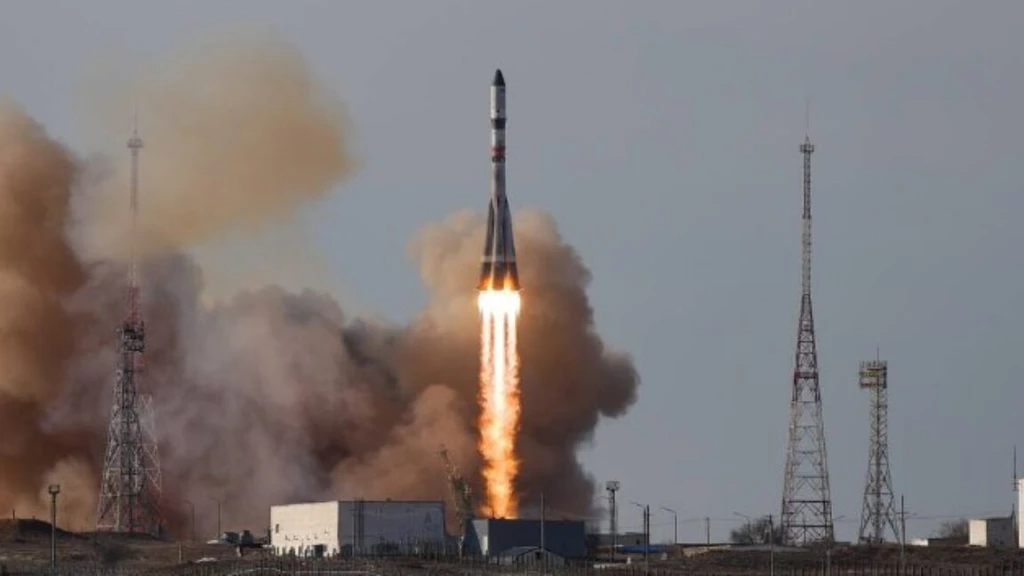
Russia has reopened its primary human launch site at Baikonur Cosmodrome, less than four months after damage from a Soyuz liftoff. A Progress MS-33 cargo ship launched Sunday on a mission to the International Space Station, despite a failed antenna that required Russian cosmonaut Sergey Kud-Sverchkov to manually dock the spacecraft using the TORU remote system.
Meanwhile, an unannounced missile test was conducted Thursday from Cape Canaveral Space Force Station in Florida, likely linked to ongoing US hypersonic weapon development by the Navy and Army. The launch followed a Coast Guard hazard zone alert, similar to prior Dark Eagle hypersonic tests in 2024 and 2025.
In commercial space news, Amazon plans to double its annual launch pace for the Project Kuiper broadband constellation to over 20 missions. However, ULA’s Vulcan rocket remains grounded due to booster issues, forcing the Space Force to shift a GPS satellite launch to SpaceX’s Falcon 9. Lt. Gen. Doug Schiess confirmed the military is considering moving more missions off Vulcan.
NASA also announced it will repurpose the Power and Propulsion Element of its canceled Lunar Gateway into a nuclear-electric propulsion demo named SR-1 Freedom, targeting a 2028 deep-space launch. The agency simultaneously resumed explosive testing of methane-fueled rockets at Eglin Air Force Base to assess blast risks for future range safety decisions.
Isar Aerospace scrubbed its second Spectrum rocket launch from Norway due to a maritime incursion during countdown. The German startup aims to orbit five CubeSats on a future attempt. Meanwhile, NASA’s Artemis II mission remains on track for an April 1 launch after returning to Pad 39B at Kennedy Space Center.
The US Space Force activated two new cyber squadrons at Patrick and Vandenberg Space Force Bases to defend launch operations from digital threats, including malware and ground system hijacking.