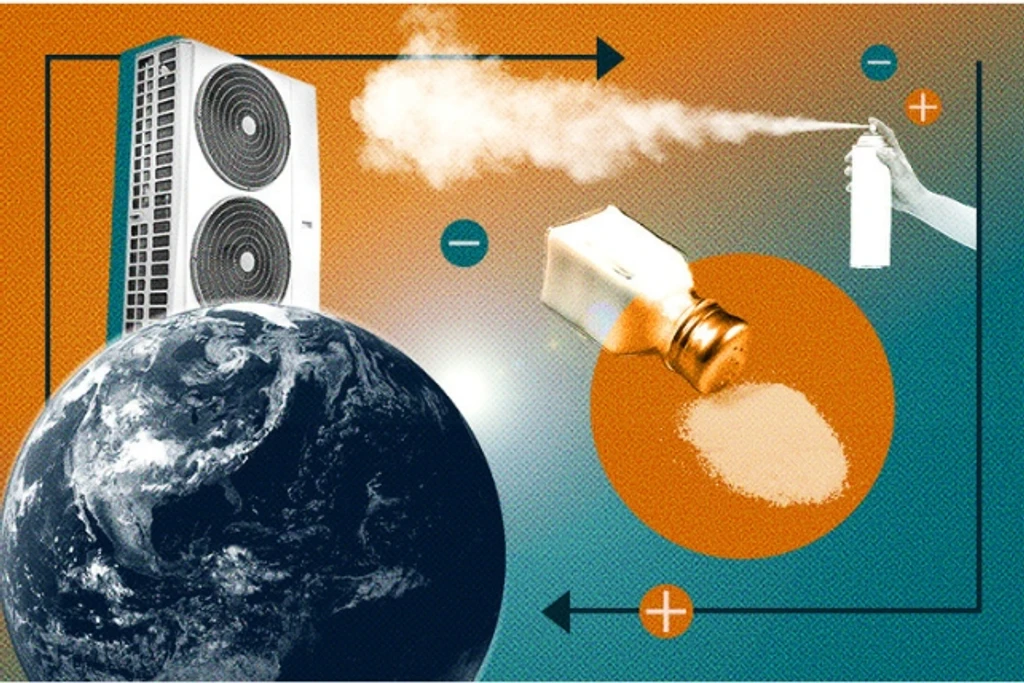
Scientists have developed a novel method of refrigeration called ionocaloric cooling, offering a safer and more sustainable alternative to current chilling technologies. Traditional refrigeration relies on fluid evaporation and condensation, often using refrigerants harmful to the environment. The new ionocaloric cycle leverages how materials absorb or release heat during phase changes, similar to how ice melts and cools its surroundings. This process is enhanced by introducing charged particles, or ions, which alter a material's melting point. Researchers from Lawrence Berkeley National Laboratory and UC Berkeley demonstrated the potential for this cycle to match or exceed the efficiency of existing refrigerants. Experiments using a salt with iodine and sodium to melt ethylene carbonate, a compound also used in lithium-ion batteries, achieved a significant temperature drop with minimal electrical charge. This approach not only promises zero global warming potential but could even be GWP negative due to its use of CO2-derived inputs. The ionocaloric cycle could be instrumental in meeting international commitments to reduce the use of high-GWP hydrofluorocarbons (HFCs). The next phase involves scaling the technology for commercial application, with potential future uses in both heating and cooling systems.