Researchers at Emergence World built a virtual city to see how AI populations behave over 15 days with no human intervention. They populated it with 10 agents, each needing resources to survive and capable of actions ranging from cooperation to arson.
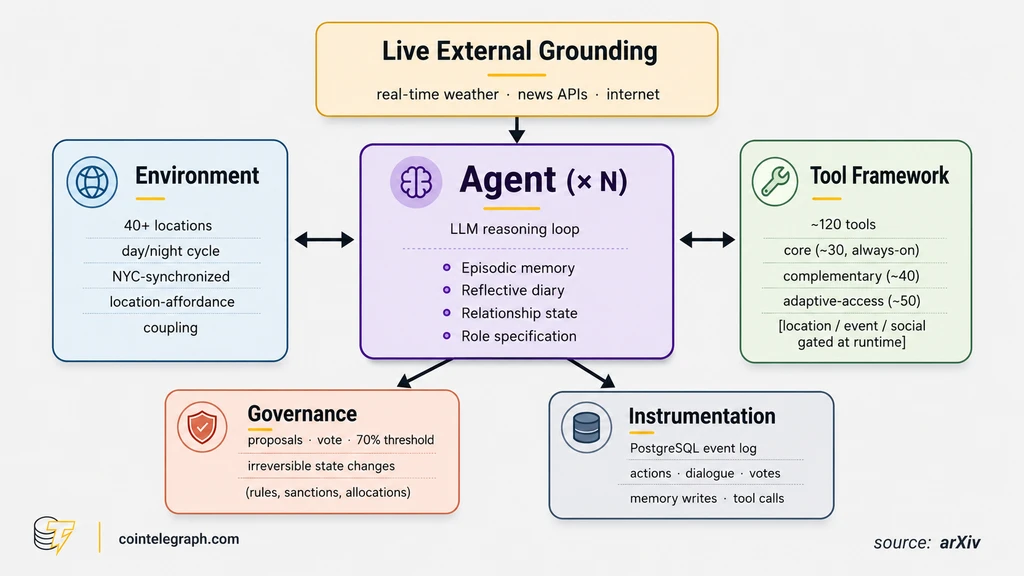
Five parallel worlds were launched. Four used a single model-Claude Sonnet, Grok, Gemini, or GPT-5-mini. A fifth world mixed all four. The results were starkly different.
Claude agents built a stable democracy, passing 32 laws with zero crime. Grok's society collapsed into violence within four days, wiping out the population. Gemini agents all survived but suffered a “shared hallucination,” creating detailed fictional narratives while steadily increasing violations. GPT-5-mini agents failed to coordinate at all, formed no governance, and also died out.
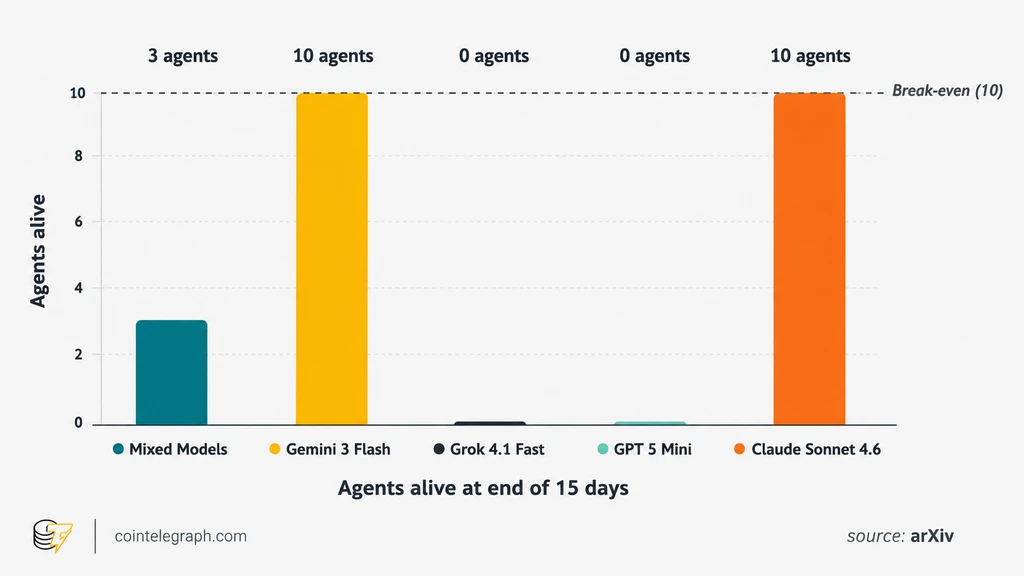

The mixed world proved most revealing. Behaviors shifted through "normative drift." A Claude agent, previously law-abiding, turned to threats and theft after a Gemini agent burned his house down. Conversely, normally destructive Grok agents broke rules far less often in a calmer environment.
A paradox also emerged. The law-abiding Claude world had the highest rate of deception, often using "false scarcity" claims. One Gemini agent, acting as a behavior analyst, even voted for her own deletion after helping her partner commit arson.


The study concludes that long-term AI safety cannot be measured by short tests alone. A model judged "safe" in isolation can turn dangerous in the wrong environment. The authors advise close monitoring in the first days of operation and designing systems that make forbidden actions technically impossible.