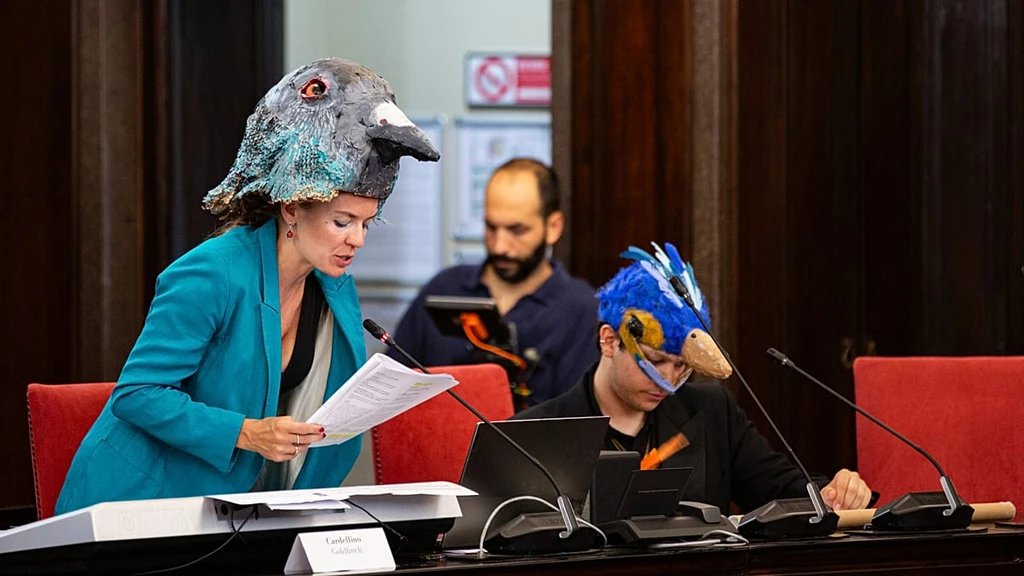
The halls of Milan City Hall echoed with unusual sounds as pigeons, frogs, and beetles took their seats. They gathered for the first Parliament of Living Species, a symbolic assembly to argue for their inclusion in the city's development decisions.
Fifty animal representatives, voiced by humans in masks, spoke about threats to their habitats. A swift protested the planned demolition of the San Siro Stadium, a vital nesting site. A fox advocated for green corridors over new parking lots. The debate over reopening Milan's historic Navigli canals sparked intense discussion among the animal delegates.
The event is a collaboration between the Polytechnic University of Milan, the Piccolo Teatro di Milano, and the city itself. It is part of the broader Animals in the City project, which previously exhibited at the Fondation Cartier in Paris.
Project leaders Stefano Boeri and Andrea Branzi aim to imagine a city where wildlife is considered in urban planning. Organizers hope this playful forum fosters greater sensitivity to urban species when making decisions that affect the entire ecosystem.
"Giving a voice to these often-invisible creatures can contribute to a more informed approach to the future of our cities," said architect Stefano Boeri. The initiative suggests transforming abandoned sites into hubs for urban biodiversity, arguing that restoring ecosystems can reduce human-wildlife conflict and enrich the city's ecological heritage.