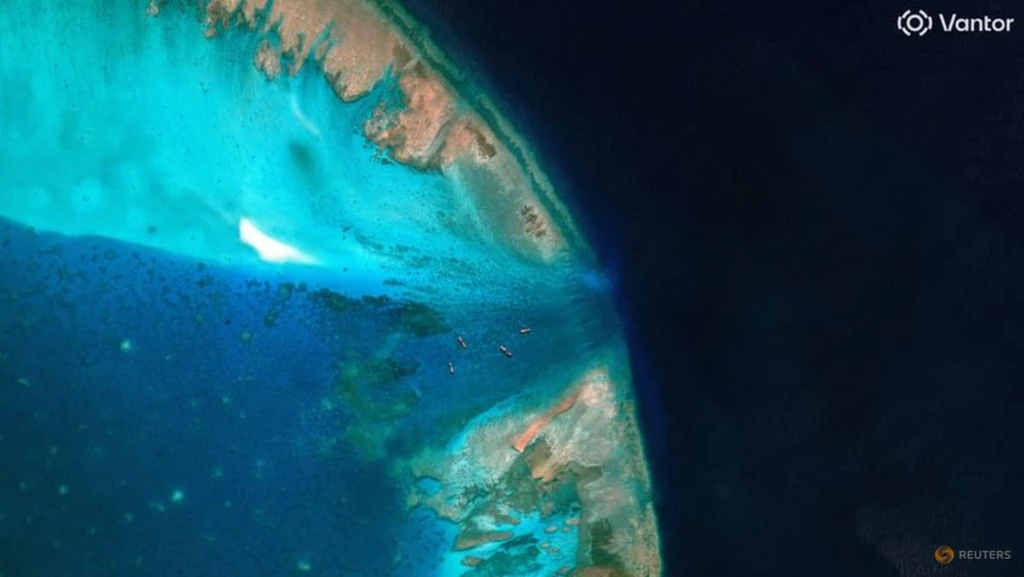
China has announced plans to further develop over 11,000 islands, aiming to strengthen its maritime power, secure natural resources, and reinforce territorial claims. The move is part of a long-term campaign to enhance governance and assert control in disputed waters.
Recent years have seen China construct artificial islands, airstrips, and military facilities in the South China Sea. The People's Daily emphasized the strategic importance of islands for unlocking deep-ocean resources, stating that major global powers are increasingly focusing on oceanic development.
China's investment in its navy, including submarines and aircraft carriers, supports its ambition to become a "great maritime power." Beijing previously declared a national nature reserve at the disputed Scarborough Shoal to assert its claim, a move that has been a flashpoint with the Philippines.
These island facilities enable Chinese law enforcement, naval, and militia vessels to conduct continuous patrols up to 1,000 nautical miles from its coastline. Despite these efforts, a senior Taiwanese official recently visited Itu Aba, a Taiwan-controlled island in the Spratly Islands.
Meanwhile, the Philippines, the United States, and partner nations have commenced military drills across the Philippine archipelago, including maritime operations, projecting a multinational front against China in a vital trade conduit.
Analysts suggest China's island-building strategy may have reached a point of diminishing returns, as it has not prevented Southeast Asian energy projects or resupply missions in recent years.