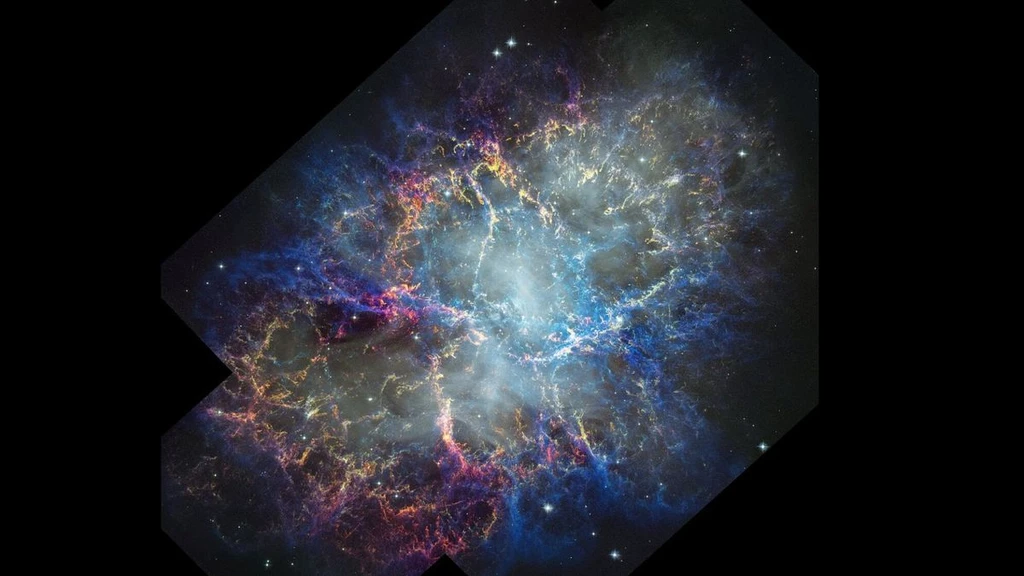
The Crab Nebula, a supernova remnant first observed in 1054, continues to expand nearly a millennium after its birth. Hubble Space Telescope images taken 25 years apart reveal filaments racing outward at 3.4 million mph-driven not by shockwaves, but by a powerful pulsar at its core.
The pulsar, a rapidly rotating neutron star, channels energy through its intense magnetic field, illuminating streams of sulfur and oxygen in red and yellow, while blue zones mark the hottest, lowest-density gas.
Lead astronomer William Blair of Johns Hopkins University noted the revelation: "The sky is not immutable." Hubble’s Wide Field Camera 3, installed in 2009, enabled precise comparison of the nebula’s evolving structure.
This dynamic evolution underscores Hubble’s enduring scientific value-and the unseen forces shaping cosmic relics.