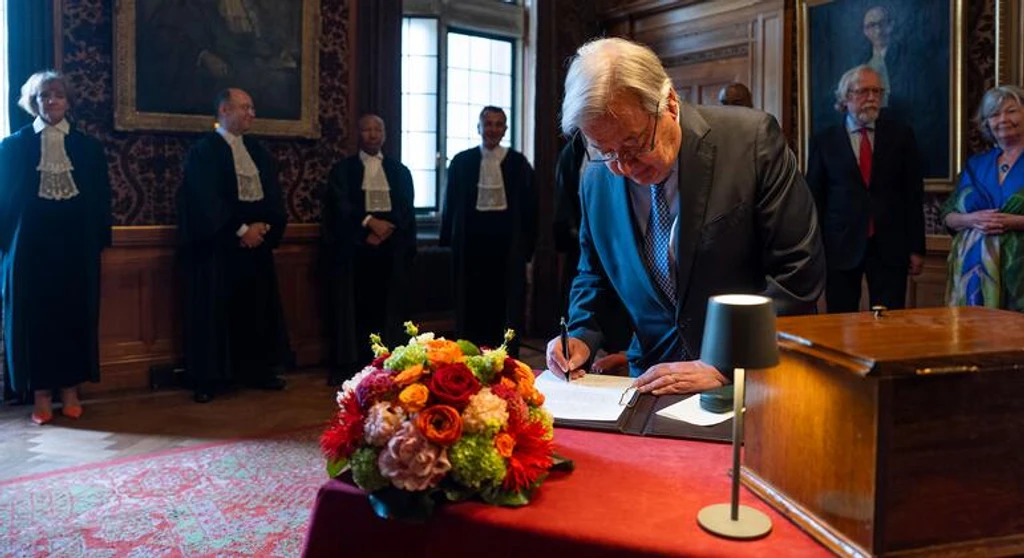
The United Nations' highest tribunal, the International Court of Justice (ICJ), celebrated its 80th anniversary. Based in The Hague, the court resolves disputes between states and offers advisory opinions. UN Secretary-General António Guterres addressed the milestone, highlighting the court's founding post-World War II. Leaders then chose a path guided by the UN Charter and international law over coercion.
Guterres stated the court was built on the principle that "the force of law must always prevail over the law of force," serving as a cornerstone for peace.
Over eight decades, ICJ rulings have significantly shaped the world. The increasing caseload signals growing trust in the court's authority and independence. Guterres emphasized that court decisions are binding, not optional obligations.
However, Guterres warned of an "erosion of international law," citing ongoing violations and the questioning of international justice institutions. He cautioned that "when the law of force replaces the force of law, instability becomes contagious," disproportionately affecting the most vulnerable.
Facing a "moment of crisis," Guterres urged the international community to strengthen international law, commit to peaceful dispute resolution, and respect ICJ judgments. He asserted that adhering to international law is crucial, especially in an era of shifting power dynamics, calling it the "only right choice."