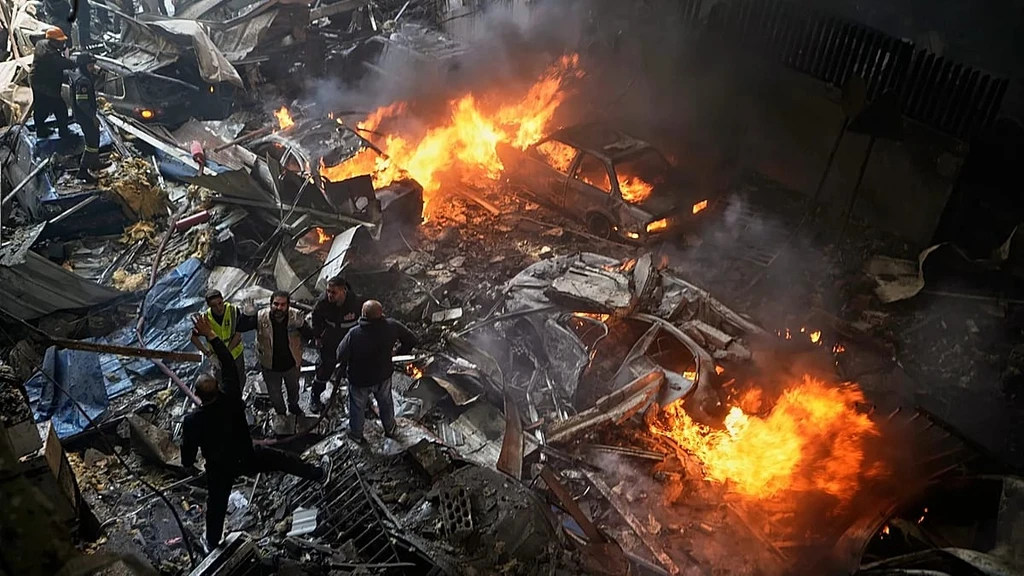
Israeli warplanes struck multiple densely populated areas in central Beirut on Wednesday afternoon without prior warning. This occurred just hours after a two-week ceasefire was announced between the United States and Iran. Israel's military confirmed the strikes, stating the agreement does not extend to its ongoing conflict with the Iran-backed militant group Hezbollah in Lebanon.
The military described the operation as the largest coordinated strike of the current war, targeting over 100 Hezbollah sites in Beirut, southern Lebanon, and the Bekaa Valley within a rapid timeframe. Reports indicated that apartment buildings and commercial zones were hit, leading to significant panic and emergency responses. While casualty figures remain unconfirmed, the strikes hit busy locations.
Israel's military stated its targets included missile launchers, command centers, and intelligence infrastructure, accusing Hezbollah of using civilians as human shields. The military issued a statement urging Lebanon and its civilians to reject Hezbollah's presence in civilian areas and its weapon build-up.
A Hezbollah official, speaking anonymously, indicated the group was allowing mediators a chance for a ceasefire in Lebanon but had not committed, citing Israel's alleged non-adherence. The group stated it would not accept a return to the pre-war status quo and expressed a desire to avoid prolonged conflict.
This escalation follows previous Israeli airstrikes in Lebanon, which have resulted in over 1,500 reported fatalities and displaced over a million people. The recent strikes have cast uncertainty over the return of displaced civilians who had begun preparing to go home following the Iran ceasefire announcement.