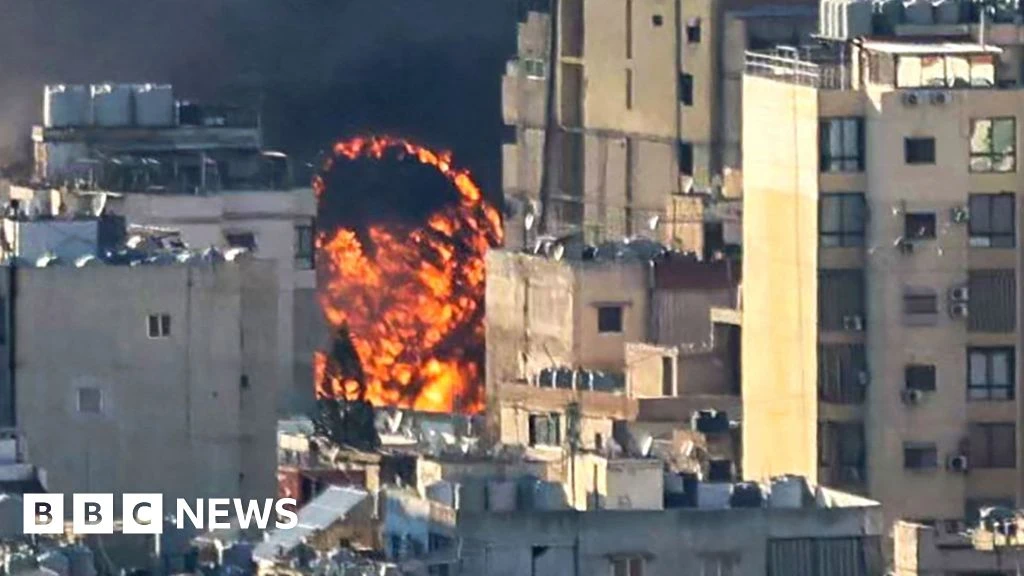
Israel's military has struck Hezbollah targets in Lebanon following rocket and drone fire targeting Haifa. The Iranian-backed group stated its actions were in retaliation for the killing of Iran's Supreme Leader, Ayatollah Ali Khamenei.
Lebanon's health ministry reported 31 fatalities from Israeli strikes in Beirut's southern suburbs and the country's south. Hezbollah leader Naim Qassem vowed a "heavy price" for the killings and continued Israeli actions.
Lebanese President Joseph Aoun condemned the Israeli strikes, cautioning against Lebanon becoming a battleground. Prime Minister Nawaf Salam announced a ban on Hezbollah's military activities within Lebanon.
The conflict has widened across the Middle East since a joint US-Israeli attack on Iran's leadership and armed forces. Iran responded with missile and drone launches towards Israel and Gulf Arab states hosting US bases.
Hezbollah's military wing claimed responsibility for launching rockets and drones at an Israeli missile defence site south of Haifa. The Israel Defense Forces (IDF) confirmed intercepting one projectile and stated several others landed in open areas with no reported casualties.
Israeli forces responded with air assaults on Beirut's southern suburbs and southern Lebanon, targeting Hezbollah operatives, command centers, and infrastructure. Residents fled the capital as roads near Beirut's airport were hit.
An IDF spokesperson indicated that "all options" were on the table regarding potential ground operations in southern Lebanon. The IDF chief of staff stated the actions marked the start of an "offensive campaign" against Hezbollah.
Lebanon's government condemned the rocket fire, deeming it a violation of the November 2024 ceasefire. Prime Minister Salam stressed state authority over war and peace decisions, necessitating the prohibition of Hezbollah's military activities.
The conflict has a history of exacerbating divisions within Lebanon, with calls for Hezbollah to disarm growing louder since its last war with Israel in 2024.