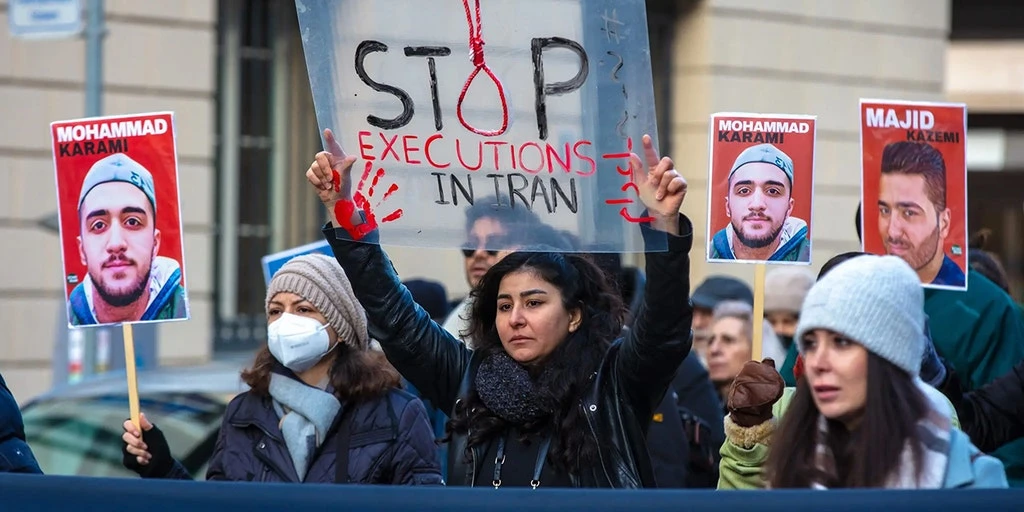
The United Nations is accusing Iran's regime of dramatically escalating its crackdown on dissent following the February conflict, with reports of executions, mass arrests, and widespread human rights abuses.
UN High Commissioner for Human Rights Volker Türk said at least 21 people have been executed and more than 4,000 arrested on national security charges since February 28. The crackdown, he says, represents a sweeping assault on fundamental rights.
"I am appalled that, on top of the already severe impacts of the conflict, the rights of the Iranian people continue to be stripped from them by the authorities, in harsh and brutal ways," Türk said.
According to the UN, nine people were executed in connection with the January 2026 protests, ten for alleged opposition group membership, and two on espionage charges. An estimated 40,000 people were killed by regime forces during the January uprising.
Türk warned that vaguely defined national security laws enable fast-track prosecutions, denied legal counsel, and coerced confessions. He called on Tehran to halt executions and release arbitrarily detained individuals.
Among those cited by the UN was imprisoned Nobel Peace Prize laureate Narges Mohammadi. Her condition sharply worsened after an emergency transfer from Zanjan Prison to a hospital, following two episodes of complete loss of consciousness and severe cardiac distress. Family members say she has sustained severe trauma and urgently needs medical attention.
Human rights activists welcome the UN's forceful language but question whether condemnation without action can create meaningful change, especially as Iran was recently elevated to a vice-chair role on a UN nuclear nonproliferation committee.
"The reason why Iranians just don't trust, don't like and don't want to know from the U.N.," said journalist Banafsheh Zand, is its repeated failure "to rise to the occasion of responding to the regime and holding their feet to the fire at the right time."