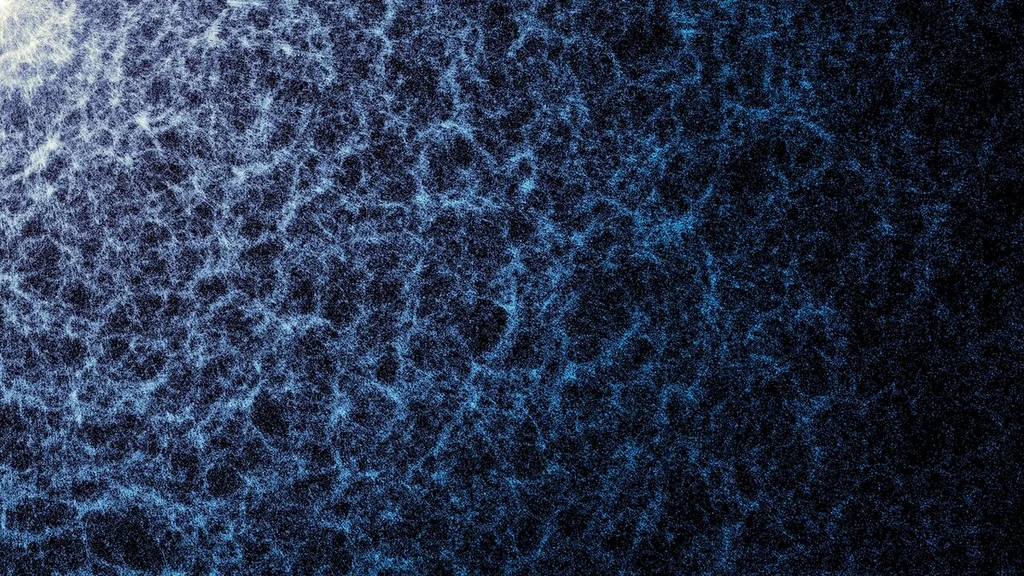
Scientists have unveiled the largest-ever 3D map of the universe, a spectacular visualization of approximately 47 million galaxies stretching back billions of years. The map, created by the Dark Energy Spectroscopic Instrument (DESI) collaboration, reveals the universe's intricate web-like structure.
The five-year survey significantly surpassed its initial goal of mapping 34 million galaxies and quasars. The data allows researchers to peer back in time, reconstructing the universe's evolution by observing how galaxies have clustered and moved over eons.
Beyond its visual splendor, the map is critical for understanding dark energy, the elusive force driving the universe's accelerated expansion. By analyzing galaxy distribution across different cosmic epochs, scientists can track dark energy's influence over the past 11 billion years. Early findings suggest dark energy's behavior may have evolved through cosmic history, potentially revolutionizing our understanding of the cosmos.
This monumental project involved over 900 researchers from more than 70 institutions, led by Lawrence Berkeley National Laboratory and funded by the U.S. Department of Energy. DESI will continue its observations until 2028, expanding the map further.