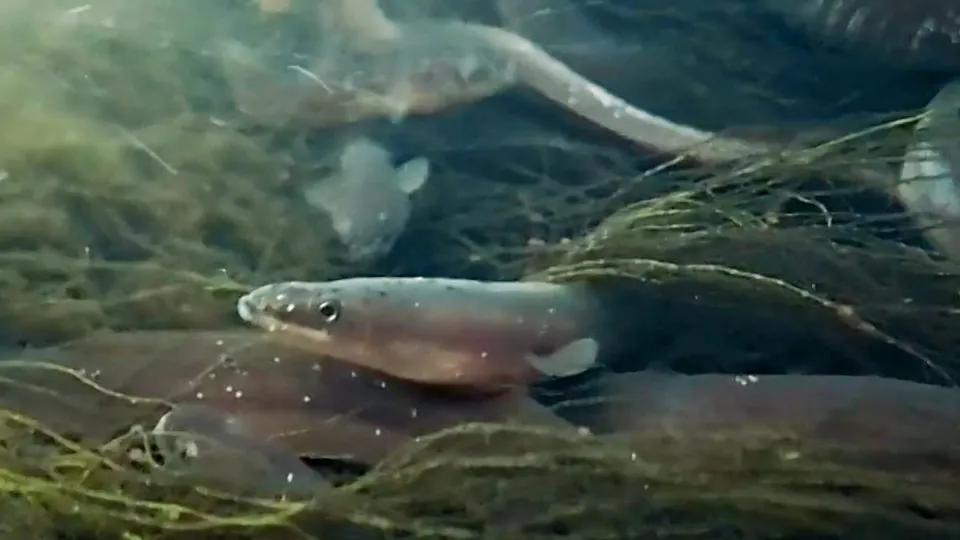
Renowned Michelin-starred chefs are calling for an end to the consumption of European eels, citing their critical endangerment. Former three-Michelin-star chef Olivier Roellinger stated, "The eel is more endangered than the panda." Scientific reports confirm a staggering 90% collapse in European eel populations over recent decades.
Roellinger's campaign, "Anguille, non merci" ("Eel, no thank you"), has garnered support from thousands of chefs and restaurant associations. Despite scientific recommendations for a complete halt to catches, eel fishing and trade persist in the EU. Farmed eels are sourced from wild populations, as commercial captive breeding has not been achieved.
The European Union aims to allow 40% of adult eels to escape to reproduce. However, France, a major glass eel fisher, plans to maintain quotas until 2027. Spain's proposal for a total ban faces provincial opposition.
The European eel, a prized delicacy, is a victim of overfishing, pollution, and habitat loss. The EU banned exports in 2009, yet Europol estimates tonnes of glass eels are smuggled annually to East Asia. DNA tests reveal European eel is often illegally imported and mixed with other endangered species like the American and Japanese eel.
Overfishing, pollution, and climate change are primary drivers of eel decline. The European eel is listed under CITES, requiring annual trade reports. A recent CITES meeting saw the EU and Panama propose listing all eel species, but the proposal was not adopted. A resolution was approved, urging collaboration on traceability and enforcement to combat illegal trade and strengthen conservation efforts.