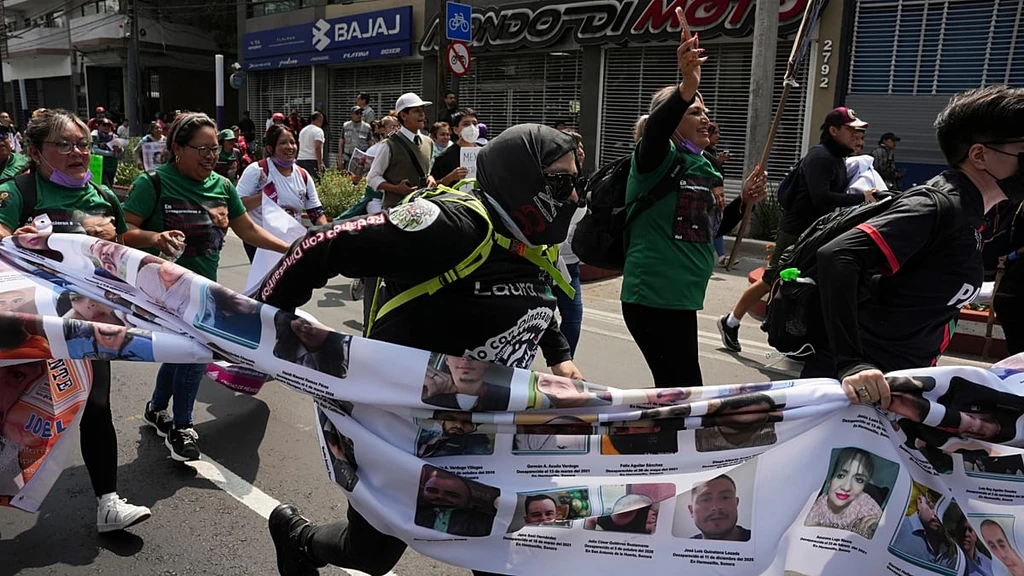
The opening day of the 2026 FIFA World Cup in Mexico City presented a stark duality. Inside the Estadio Azteca, stars like Shakira and Andrea Bocelli entertained crowds. Outside, over 1,000 relatives of the disappeared marched with candles and photographs, protesting a humanitarian emergency that has claimed more than 130,000 lives.
Protestors have dubbed the host nation "Mexico campeon en desaparcion"-Mexico the champions of disappearance. Their demonstration underscores a deep frustration: as the world focuses on football, families demand attention for a crisis fueled by organized crime and alleged state negligence.
The scale of the tragedy is compounded by the role of madres buscadoras, volunteer search groups often led by mothers. These civilians frequently locate remains in cartel-linked sites, such as recent discoveries in Jalisco, operating with minimal government support and facing significant threats from criminal organizations.
In response to mounting pressure, President Claudia Sheinbaum announced reforms in March aimed at eliminating bureaucratic delays in investigations. The proposed measures seek to streamline identification processes, increase transparency in official statistics, and ensure immediate action upon reports of disappearances.
For the families involved, the issue transcends criminal violence; it is a fight for truth and justice. Despite the festive atmosphere of the tournament, the protests signal a determined effort to keep this generational crisis in the international spotlight.