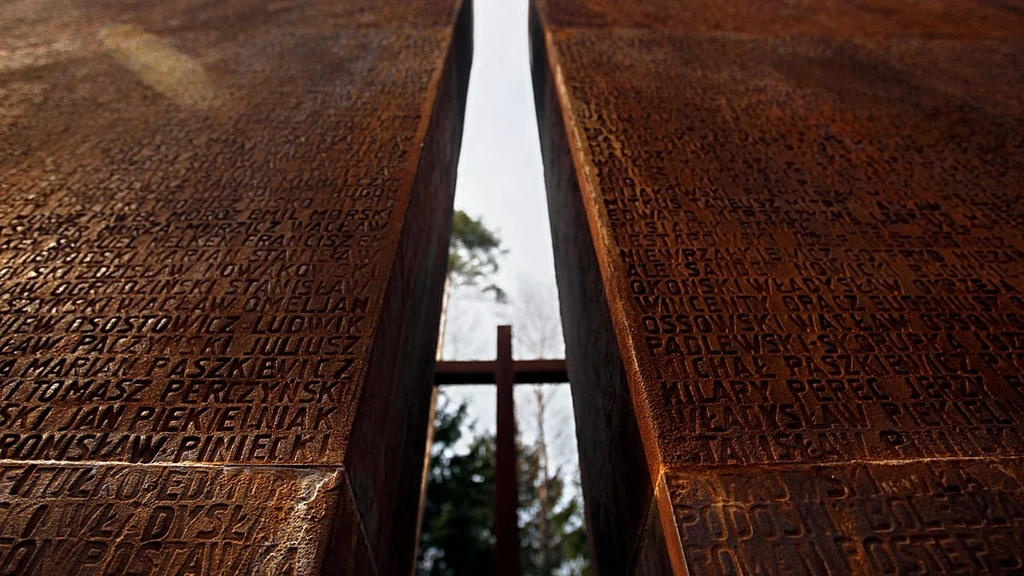
Russia has opened an exhibition titled "10 Centuries of Polish Russophobia" at the Katyn memorial complex, drawing strong condemnation from Polish officials and victims' families. The exhibition's timing, coinciding with the anniversary of the 2010 Smolensk air disaster and Poland's Day of Remembrance for the Katyn Massacre victims, has been decried as "disgusting malice."
The display, organized by the Russian Military-Historical Society, is situated at the site where Soviet secret police murdered approximately 22,000 Polish officers and intelligentsia in 1940 on Stalin's orders. According to the society, the exhibition portrays "hatred of the Polish elite towards Russia" and accuses Warsaw of "aggressive anti-Russian policy," citing actions like removing Soviet monuments and supporting Ukraine.
Polish officials view the exhibition as a return to Soviet-era propaganda, reminiscent of attempts to blame Germans for the Katyn massacre. They argue it's part of a broader Russian strategy to misrepresent history and assign blame for the outbreak of World War II to Poland.
Families of Katyn victims have expressed deep offense, highlighting that the chosen venue and timing are calculated to inflict pain. They note that Moscow did not exist in its current form 10 centuries ago, questioning the exhibition's premise.
Recent actions at Katyn-related sites, including the removal of Polish flags and military decorations, and the installation of busts of Soviet leaders, further fuel tensions. Russia officially admitted NKVD responsibility for the Katyn massacre in 1990, but historical narratives remain contentious.