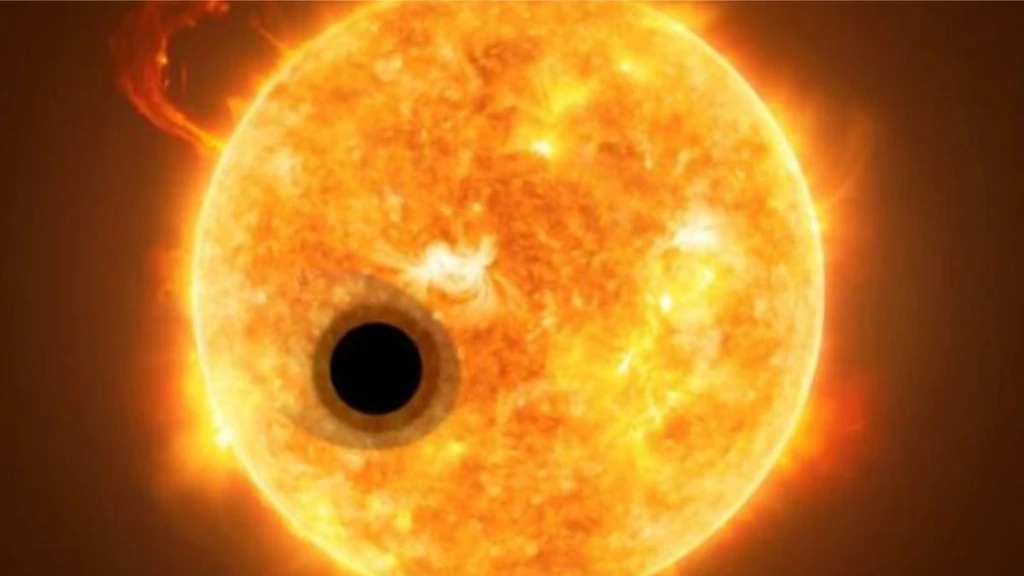
Astronomers using the James Webb Space Telescope have made a surprising discovery about a planet orbiting a dead star, offering clues about the future of our own Solar System.
The planet, known as WD 1856b, circles a white dwarf-the ultra-dense remnant of a Sun-like star that has exhausted its fuel and collapsed. This is the same fate awaiting our Sun in roughly five billion years.
The team expected WD 1856b, a giant planet similar in size to Jupiter, to be extremely cold. Instead, its atmosphere measured around 126 degrees Celsius, indicating it was somehow reheated long after its host star died.
Researchers believe a nearby companion star may have gravitationally tugged the planet inward and warmed it. This suggests giant planets can have a "second life" after stellar death, migrating and reheating rather than being destroyed.
While the Sun's red giant phase will likely destroy Mercury and Venus, Earth's fate remains uncertain. The study of systems like WD 1856b helps scientists understand the complex dynamics that may allow some worlds to survive their star's demise.